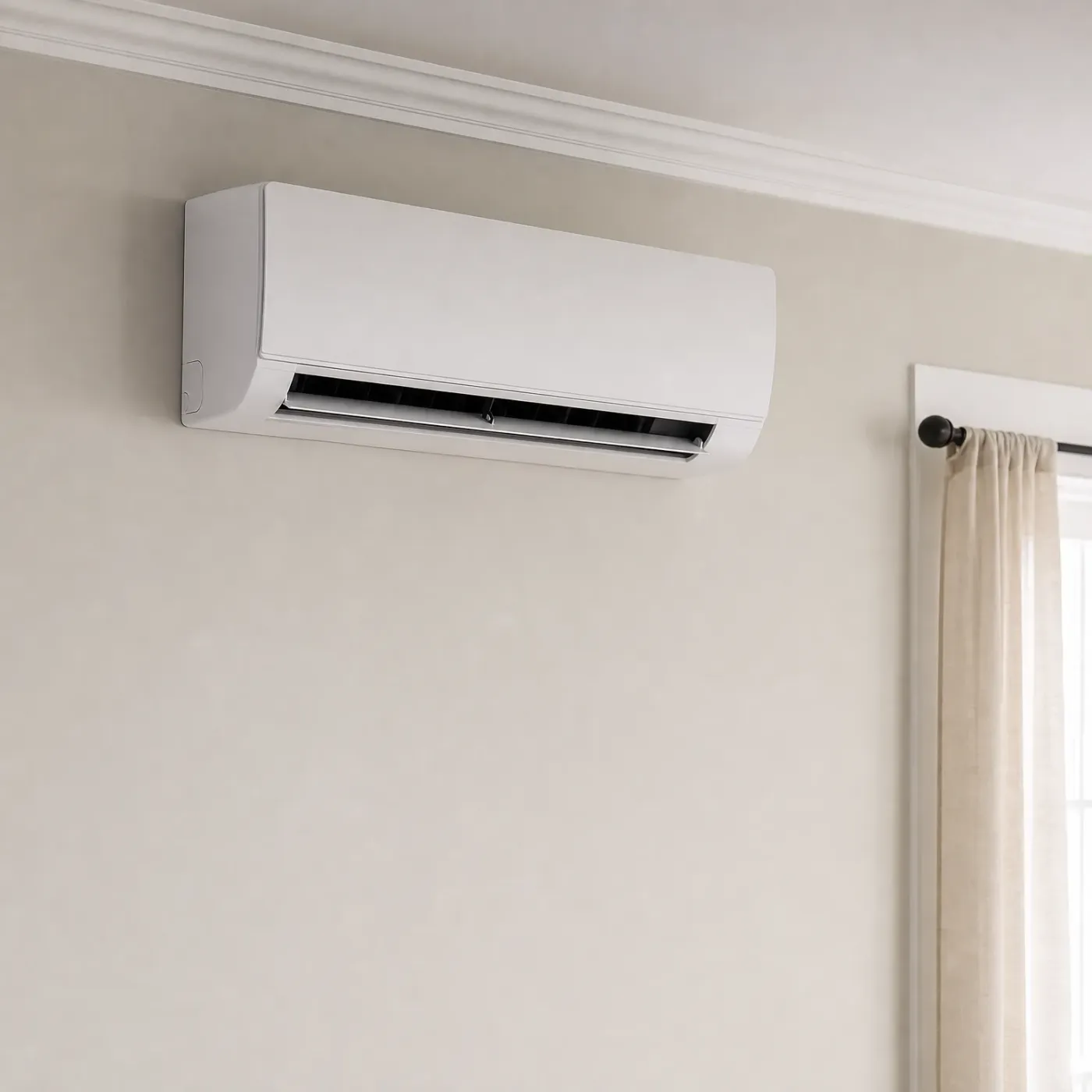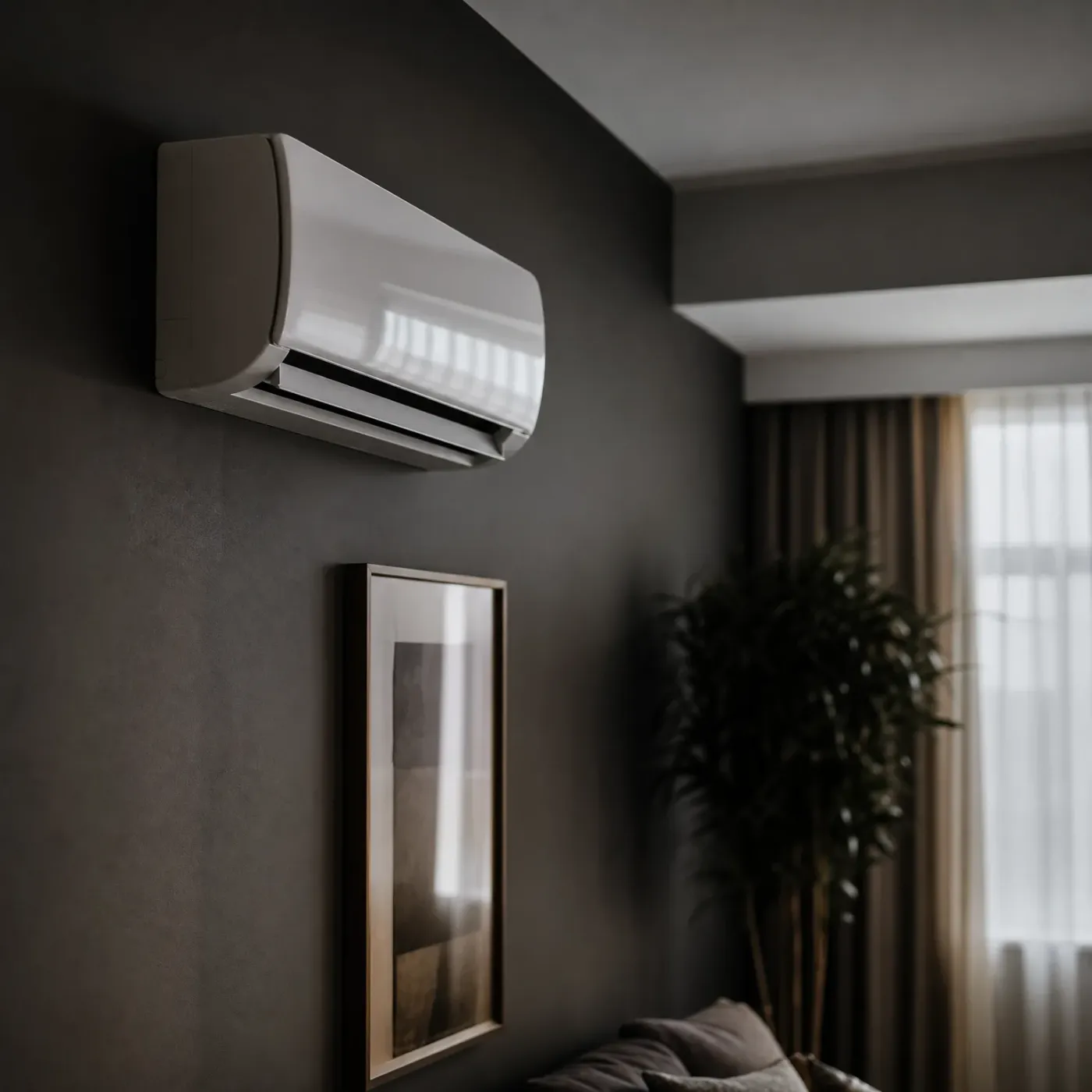
A white wall-mounted mini-split air conditioner on a dark gray interior wall above a framed picture, with a potted plant and curtained window to the right.

Get the right pro for your mini split

Adding a mini split to an Iowa home with a furnace

You've got a furnace for the cold and you're adding a mini split, probably for a room the furnace doesn't keep comfortable or for the muggy months when you want cooling without running ductwork. The question is how the two work together and who can install it right alongside your gas system. A local contractor who installs these in Iowa homes every year can look at your setup and tell you what fits.

Find a pro near me

A mini split and a furnace can run in the same house without fighting each other, as long as whoever installs it sets up the mini split as its own zone. The furnace keeps heating the rest of the house through the ductwork like it always has. The mini split handles whatever room or space it's mounted in, heating that room when it's cold and pulling the humidity down when summer gets sticky. They don't share ductwork or controls, so one doesn't override the other. Most mini splits installed alongside a furnace are there to fix one specific problem: a bonus room, a finished basement, or an addition the furnace's ducts never reached well. Sizing the mini split to that one space, not the whole house, is what makes the setup work. Get that wrong and the room still runs hot or cold no matter how new the equipment is.

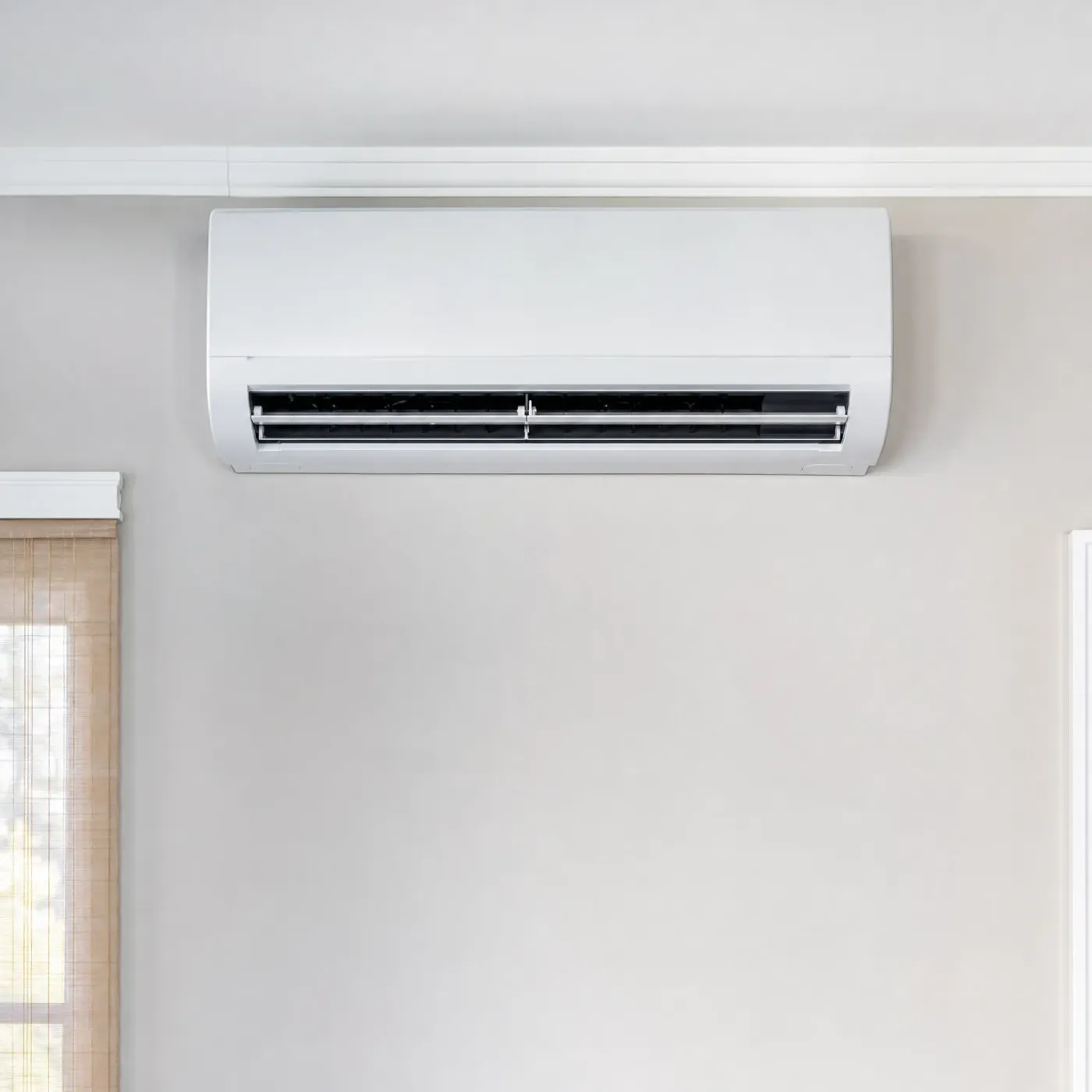
A white wall-mounted mini-split air conditioner unit installed high on a light gray interior wall below crown molding, with a bamboo-shaded window at the lower left.

Running clean

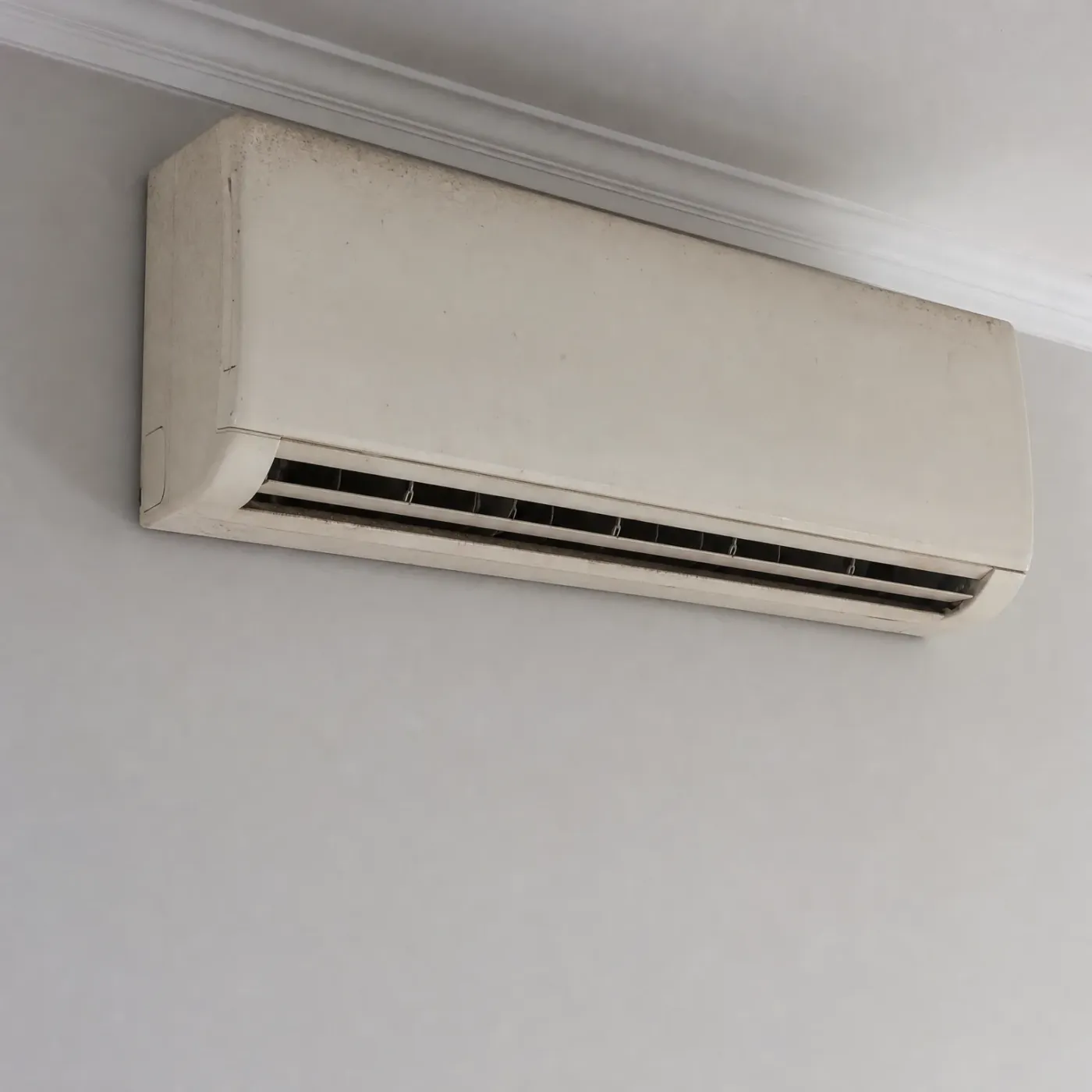
A mini split that's set up right cools a room fast and quiet, with the louvers moving to spread the air instead of blasting it in one direction. You shouldn't see dust caked on the casing or hear it struggle to reach the temperature you set.
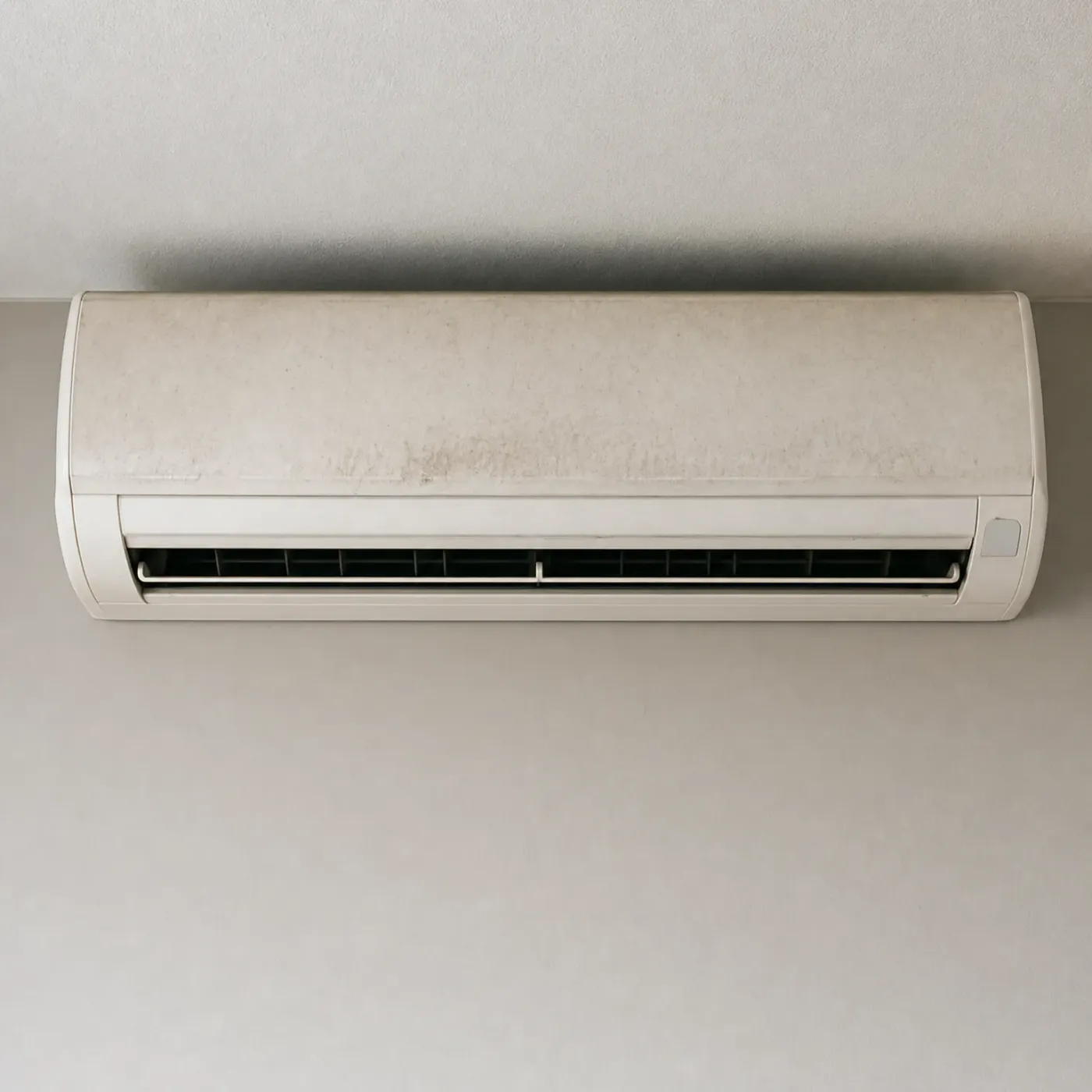

A wall-mounted mini-split air conditioner indoor unit with a dusty, discolored cover, installed near the ceiling on a plain light-colored wall.

Needing a look

Dust and discoloration on the casing usually mean the filter behind it hasn't been cleaned in a while, and a unit working that hard to push air through a dirty filter will run longer than it should. If yours looks like this, it's worth having someone check it before another muggy summer.

A smiling man in a denim shirt and white t-shirt stands in an open dark doorway of a stucco house, facing a woman with long brown hair and a green jacket seen from behind in the foreground.

The room it's going in matters more than the brand

Think about why you want the mini split in the first place. If it's a bonus room over the garage, or a finished attic, or an addition the furnace's ductwork never reached, you've probably already noticed it runs hot in July and cold in January no matter what the thermostat says. A mini split fixes that by heating and cooling that one space directly, without asking your furnace or your ductwork to do more work than they were built for. Where the indoor unit goes, how the line set runs to the outside condenser, and whether that wall can even take it, changes from house to house.

That's the kind of thing a contractor has to see in person. A local installer who works on mini splits and furnaces in the same houses across Iowa knows what tends to go wrong with additions and converted rooms here, and can tell you straight whether the spot you have in mind will actually perform. Getting matched with one installer means someone local looks at your room, not a sales rep reading you a brochure.

Interior corner with a beige sofa holding a dark green and a light cushion and a textured throw, a potted small-leaved tree beside a white-framed window, and a dark shallow bowl on a wooden coffee table in the foreground.
A white wall-mounted mini-split air conditioner installed high on a beige interior wall below crown molding, with a window and light curtain on a black rod at right.

Doing its job

This is what a mini split looks like when it's sized and installed right. It sits near the ceiling, the louvers open and moving, and it keeps that room steady through a sticky Iowa summer without the furnace or its ductwork involved at all.

A wall-mounted mini-split air conditioner indoor unit with a dusty off-white casing and dark lower vent, installed high on a plain light-colored wall below a ceiling molding.

Falling behind

Dust built up on the casing like this usually means the filter hasn't been cleaned and the unit is working harder than it should. It'll still run, but it'll struggle to hit the temperature you set and cost more to get there.

Mini Split or Extend the Ductwork

Ductless mini split

  • Cools and heats just the one room, so a bonus room over the garage gets its own thermostat instead of sharing the furnace's setting.
  • No new ductwork to run, which matters if the room is an addition or a finished attic the furnace never reached.
  • Mounts high on a wall near the ceiling, out of the way, with a line set running through a small hole to the outdoor unit.
  • Keeps working for that room if the furnace or its ductwork has a problem elsewhere in the house.
  • Runs on electricity, and with power cheap in Iowa, running it through a muggy summer doesn't add much to the bill.
  • Only conditions the space it's installed in, so a second room with the same problem needs its own unit.

Extending the furnace's ductwork

  • Keeps the whole house on one gas furnace and one thermostat, which is simpler if every room already gets even heat.
  • Adding a duct run to a room the furnace wasn't built to reach often means cutting into walls or framing to get there.
  • A duct extended too far from the furnace can end up with weaker airflow than the rooms already on the system.
  • Doesn't give you cooling on its own. The furnace handles the cold months; you'd still need central air or a mini split for summer.
  • No separate outdoor unit or line set to place, since everything ties into equipment you already have.
  • A room added to the existing ductwork shares the same system, so a problem with the furnace affects that room too.
A smiling older woman with gray hair in a cream knit sweater stands in a dimly lit kitchen beside a window showing snow outside, with a round loaf of bread on the counter in the foreground.
A woman with her hair in a bun holds a sleeping young child against her chest, both wrapped in a textured beige knit blanket on a sofa in a dimly lit room with a lamp, framed picture, and bookshelf behind them.

A pro who works on mini splits

One installer gets your project, so there's no bidding war over it.

No charge to send it. You decide if you hire them.

Why power costs don't scare you here

A mini split runs on electricity, not gas, and that's usually the one thing people hesitate on before adding one. In Iowa, power is cheap enough that running a mini split through a sticky summer, or using it to take the edge off a cold room in winter, doesn't compete with what you already pay to heat the house with gas. It's a different utility doing a different job, and neither one is fighting the other for your money.

Two systems, two thermostats

Your furnace has one thermostat for the whole house, set by whoever's near it. The mini split comes with its own, mounted right in the room it serves. That room can run warmer or cooler than the rest of the house without anyone adjusting the furnace or closing off a vent. If the furnace keeps the house at 68 and the bonus room over the garage wants 72, the mini split handles that on its own, no compromise needed.

Power costs 13.62 cents per kilowatt-hour statewide

At 13.62 cents a kilowatt-hour, running your mini split through a muggy stretch or a cold snap doesn't add much to the bill. That rate holds whether it's cooling the bonus room all August or helping out on a January night the furnace is working hard too.

EIA-861 2025 statewide residential average

Two systems, one comfortable house

  • A mini split set up as its own zone works alongside your furnace instead of competing with it.
  • The furnace keeps heating the house through its ductwork the same way it always has.
  • The mini split takes over the one room the ductwork doesn't reach, with its own thermostat.
  • Iowa's cheap power means running it through a sticky summer or a cold snap costs little.
  • Correct sizing for the room is what decides whether it cools fast and quiet or struggles.
  • A local installer who works on these units every season knows what to get right the first time.

A mini split and a furnace aren't competing for the same job. Your furnace handles the house through the ductwork it's always used, keeping everyone warm from October through the worst of a January cold snap. The mini split takes on the one room that's never been comfortable, whether that's a bonus room over the garage or an addition the ductwork never reached. It runs on its own thermostat, so that room can be cooler or warmer than the rest of the house without anyone adjusting the furnace. Iowa's cheap power means running it through a muggy August stretch, or leaning on it alongside the furnace on a hard winter night, doesn't add much to what you're already paying. What decides whether this works out well is sizing. A mini split sized for the actual room cools fast, runs quiet, and keeps up without strain. One that's too big or too small for the space never gets comfortable, no matter the brand on the unit. That's a judgment call that comes from installing these in Iowa homes season after season, seeing which ones hold up through a sticky summer and a cold one, and knowing what tends to go wrong when the sizing or the setup is off. Get that part right, and the furnace and the mini split just do their separate jobs, no conflict between them, no surprises on the bill.

A woman with dark hair in a bun wearing a cream knit sweater sits on a gray sofa in a bright living room, looking off to the side.
A woman wrapped in a knit blanket sits on a gray sofa in a living room, looking toward a bright window with houseplants and an armchair in the background.
A woman in a gray cowl-neck sweater sits on a light sofa with cushions, smiling and looking to the side, with a kitchen and window visible behind her.
A woman with dark hair in a bun, wearing a light linen shirt, sits on a sofa and looks to the side, with a window, houseplants and a kitchen with pendant lights blurred behind her.

Mini Split Installation

Get your mini split to the right pro

Only one pro gets your request, so you hear from one company.

A black-framed smartphone standing upright against a plain light gray background, its screen filled with solid green.
Step 1 of 3: Equipment