Profile view of a bearded man wearing a black baseball cap and a dark gray T-shirt against a plain light background.

Best mini split setting for an Iowa winter

Step 1 of 3: Equipment

What should I set my mini split to in an Iowa winter?

Iowa winters push a mini split hard, and most homes here lean on gas heat anyway, so you're probably wondering where the mini split fits in and what number actually keeps it running well without working against itself.

Set it between 68 and 70 degrees and leave it there

A mini split works best holding one steady temperature instead of swinging up and down. Set it between 68 and 70 and let it run. Below freezing, a mini split has to work harder for every degree, and bumping the setting up and down makes the outdoor unit cycle more than it needs to. In a lot of Iowa homes the mini split is backup to a gas furnace, so you might only need it to cover a few rooms or take the edge off on milder days. Since power here is cheap, running it steady costs you less than you'd think, and it spares the compressor the stop and start that wears on it over a winter.

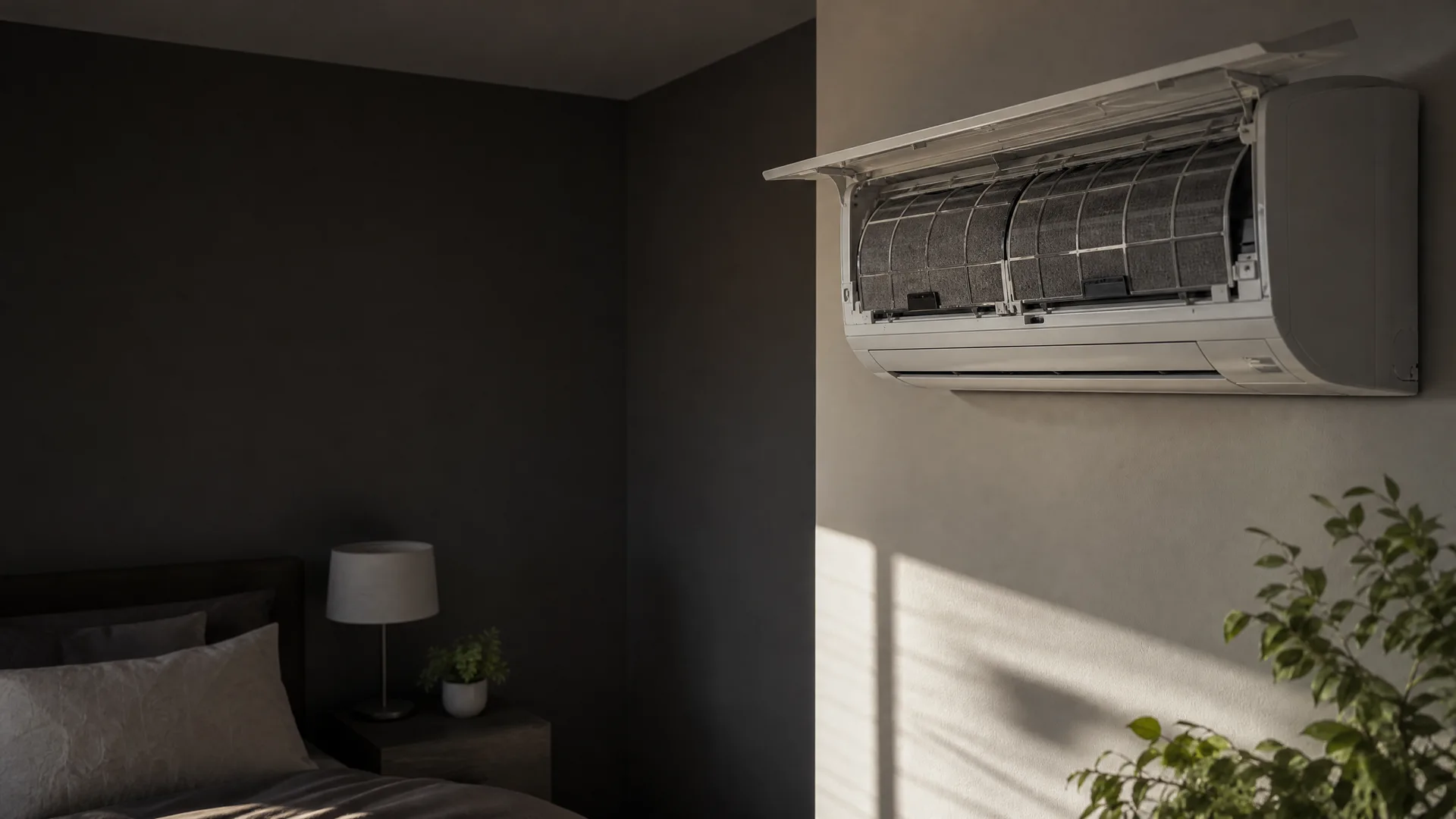
A wall-mounted mini-split air conditioner with its front cover open exposing the filters, in a dim bedroom with a bed, nightstand lamp and a potted plant.

Spring finally feels like spring, and you've got the bedroom window cracked for the first time in months. The mini split hasn't run hard in weeks, so you pop the front cover to check it before you forget again. The filter screen slides out grey with dust, more than you expected after just one winter of use. You hold it up to the window light and can't see through half of it. The gas furnace carried most of the cold, sure, but the mini split still ran plenty of hours on the mild days, and it shows. You set it on the sill to clean it, thinking about how long it actually sat like that behind the cover, unnoticed, doing its job anyway.

Why is my mini split running nonstop but the room still feels cold?

You hear it cycling more than it used to, and the air coming out feels cooler than it should at that setting. Maybe there's a thin coat of frost on the outdoor unit that doesn't melt off between cycles. Inside, the vents by the head unit rattle a little, or the airflow out of it feels weaker than last winter. On its own, none of that means much on a single cold night. Left alone through a whole Iowa winter, a unit working that hard to hit its setting is burning more power than it should, and a coil that's staying iced can end up straining the compressor it's trying to protect.

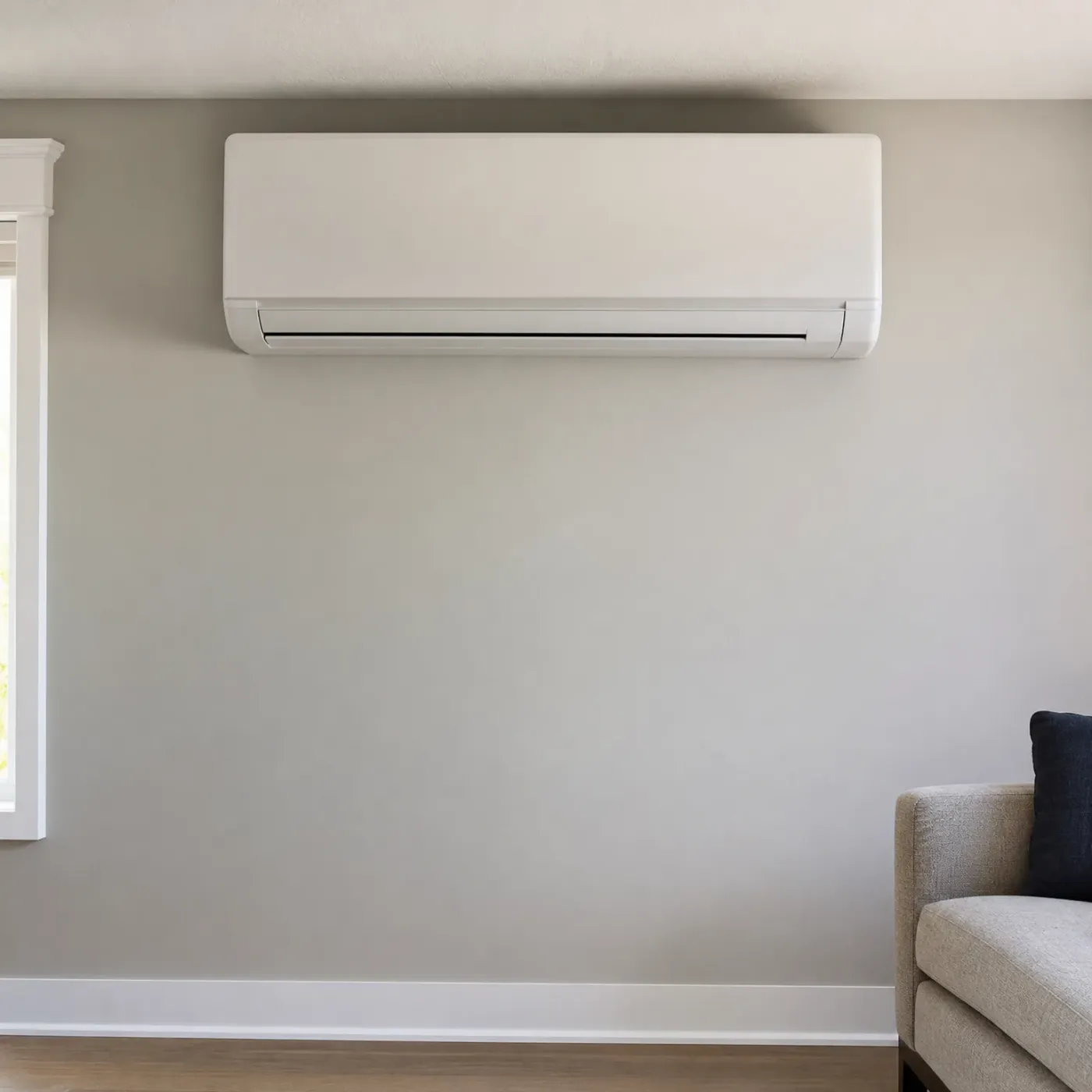
A white wall-mounted mini-split indoor unit installed high on a gray interior wall, with a window at left and part of a light gray sofa with a dark cushion at lower right.

Clean coil, clear airflow

Air moves through the vents without resistance and the room holds its set temperature. The coil stays cold enough to pull heat efficiently but not so choked with dust that it frosts over. A unit running like this cycles on, does its job, and shuts off.

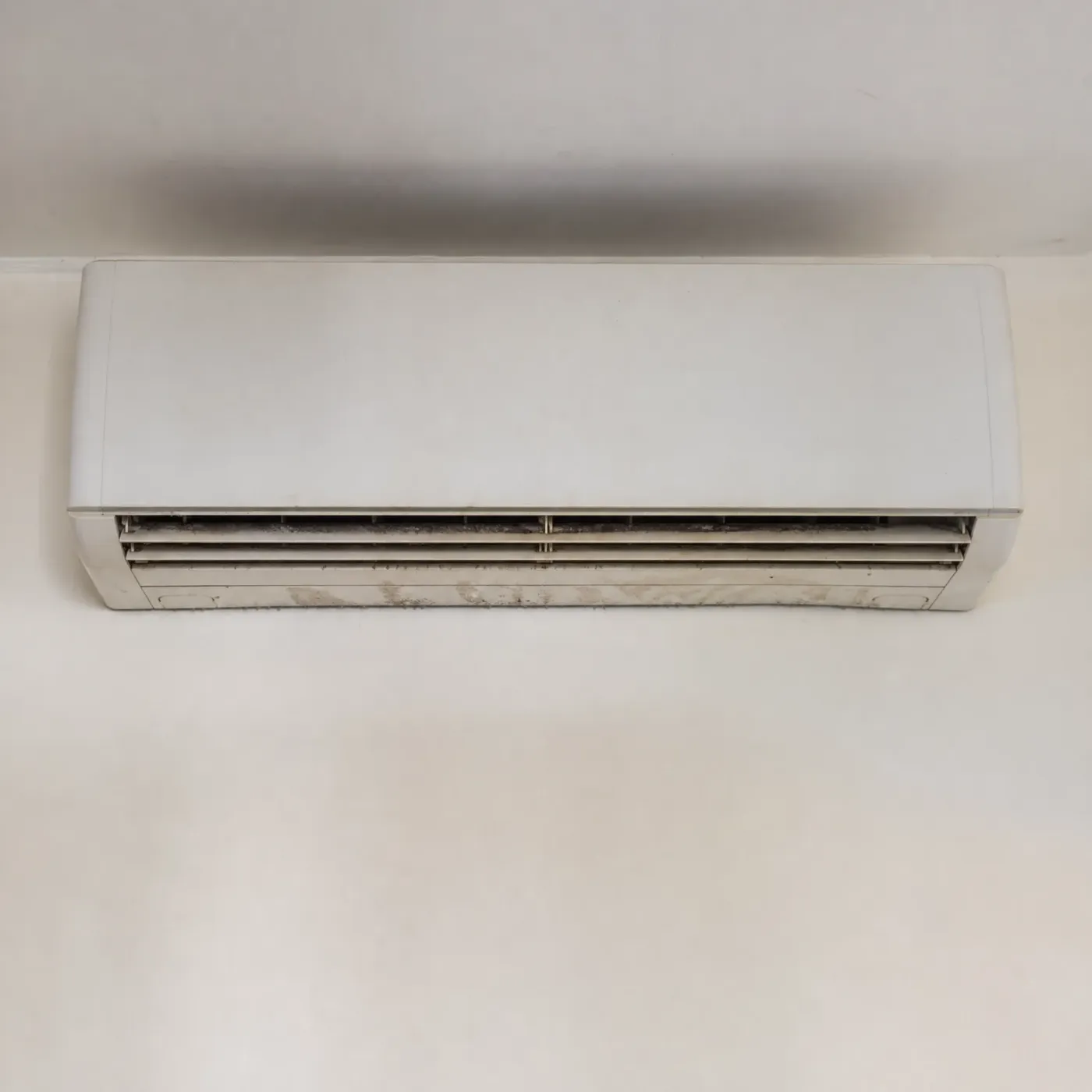
A white wall-mounted mini-split air conditioner indoor unit with visible dust and staining along its lower vent, installed on a plain pale wall.

Dirt and mold buildup

That grime along the vents is what's left when a filter stops catching dust and starts letting it through. It blocks airflow across the coil, so the unit runs longer to hit the same temperature. Mold in that buildup gets pushed into the room every time the fan turns on.

A smiling man in a gray long-sleeved shirt stands in a kitchen looking to the side, with open shelves of dishes, a white mug on the counter, a potted plant, and a view through a doorway into a living room.
A smiling bearded man in a green sweater sits at a white marble kitchen island with a mug, potted plant and bowl of fruit, in a bright white interior with open shelving and an arched doorway.
A smiling man with dark curly hair and a beard, wearing a dark green knit sweater, stands at a white marble kitchen counter with a dark blue mug, with open shelving, pendant lights and a houseplant behind him.
A smiling man in a green ribbed sweater stands behind a wooden table holding a ceramic mug of coffee in a kitchen with white subway tile, shelves of potted plants, and a bowl of fruit.

How defrost mode actually works

  • A mini split in defrost mode briefly blows cool air while it melts frost off the outdoor coil, and that's normal below freezing.
  • The indoor fan slows or pauses during defrost so you don't feel cold air in the room, then heat resumes once the coil clears.
  • Most units handle defrost automatically every forty five minutes to an hour when it's cold enough outside for frost to form.
  • The outdoor unit needs six inches of clearance on all sides so snow and ice don't block the coil or the fan.
  • Setting the mini split a few degrees below your gas furnace's thermostat lets the two systems split the load without fighting each other.
  • A mini split loses efficiency fast once outdoor temperatures drop into the single digits, which is where gas heat usually takes over.

A mini split pulls heat from outside air even when it's cold out, but that process leaves frost on the outdoor coil once temperatures drop toward freezing. The unit checks for this on its own, usually by sensing coil temperature or just running a timer. When it decides frost has built up, it reverses the cycle for a few minutes, sending warm refrigerant outside to melt the ice instead of heating your room. That's why the indoor fan slows down or shuts off during this stretch. It's not a malfunction, it's the system clearing itself so it can keep working. Once the coil is clear, it switches back and heat picks up again. This happens more often on the coldest, dampest days, which lines up with when Iowa winters make the outdoor unit work hardest. Clearance around that outdoor unit matters here too. Snow piling up against it or ice forming underneath blocks airflow the coil needs to shed that frost efficiently, which makes defrost cycles run longer and more often than they should. Keeping gas heat set a few degrees above the mini split means the furnace only steps in once the mini split starts losing ground, usually somewhere in the single digits outside. Below that, the mini split is spending more energy fighting frost than moving heat, and the furnace carries the load more efficiently.

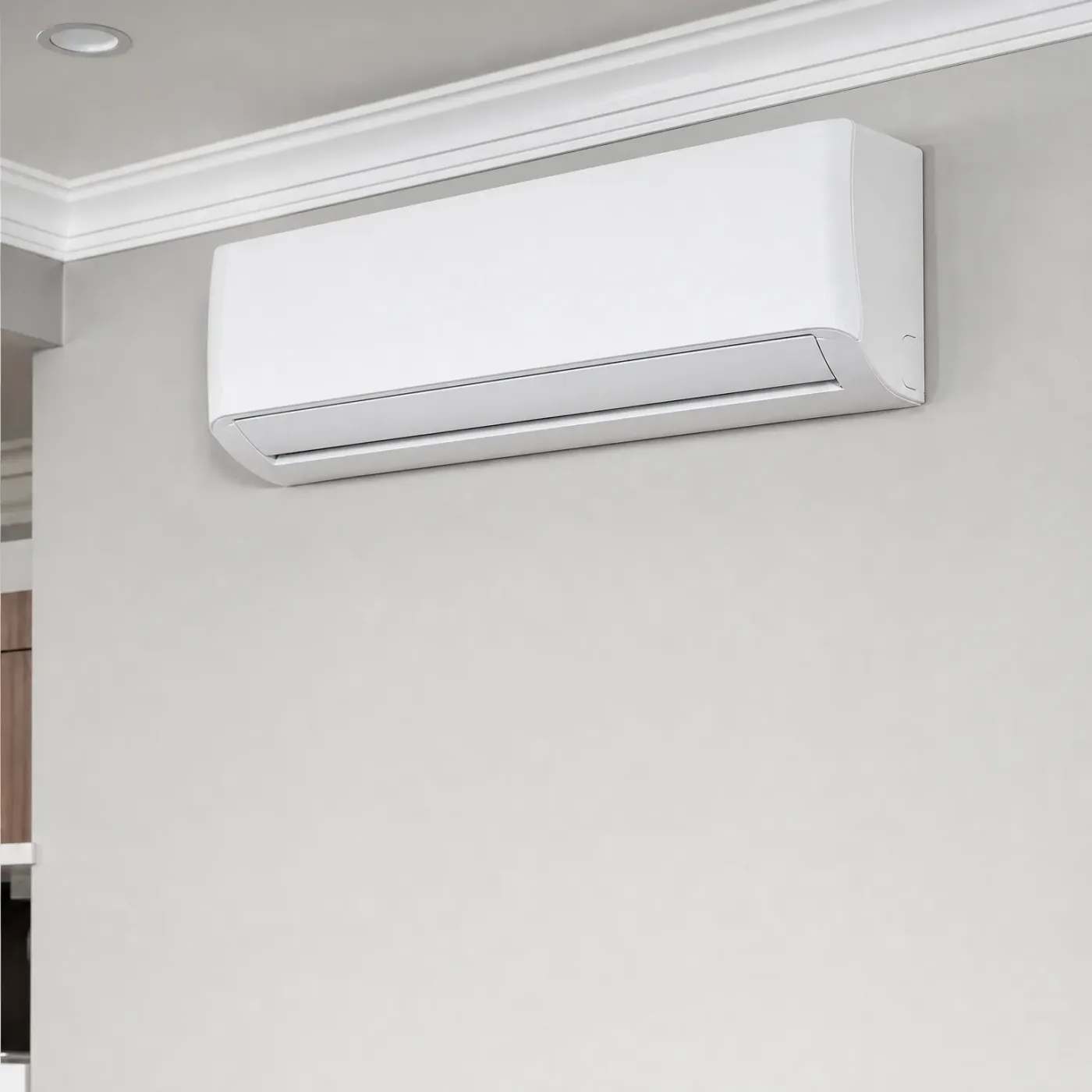
A white wall-mounted mini-split air conditioner installed high on a light gray interior wall below a white crown molding and ceiling with a recessed light.
Set the temperature once and the unit holds it, cycling on and off without strain.
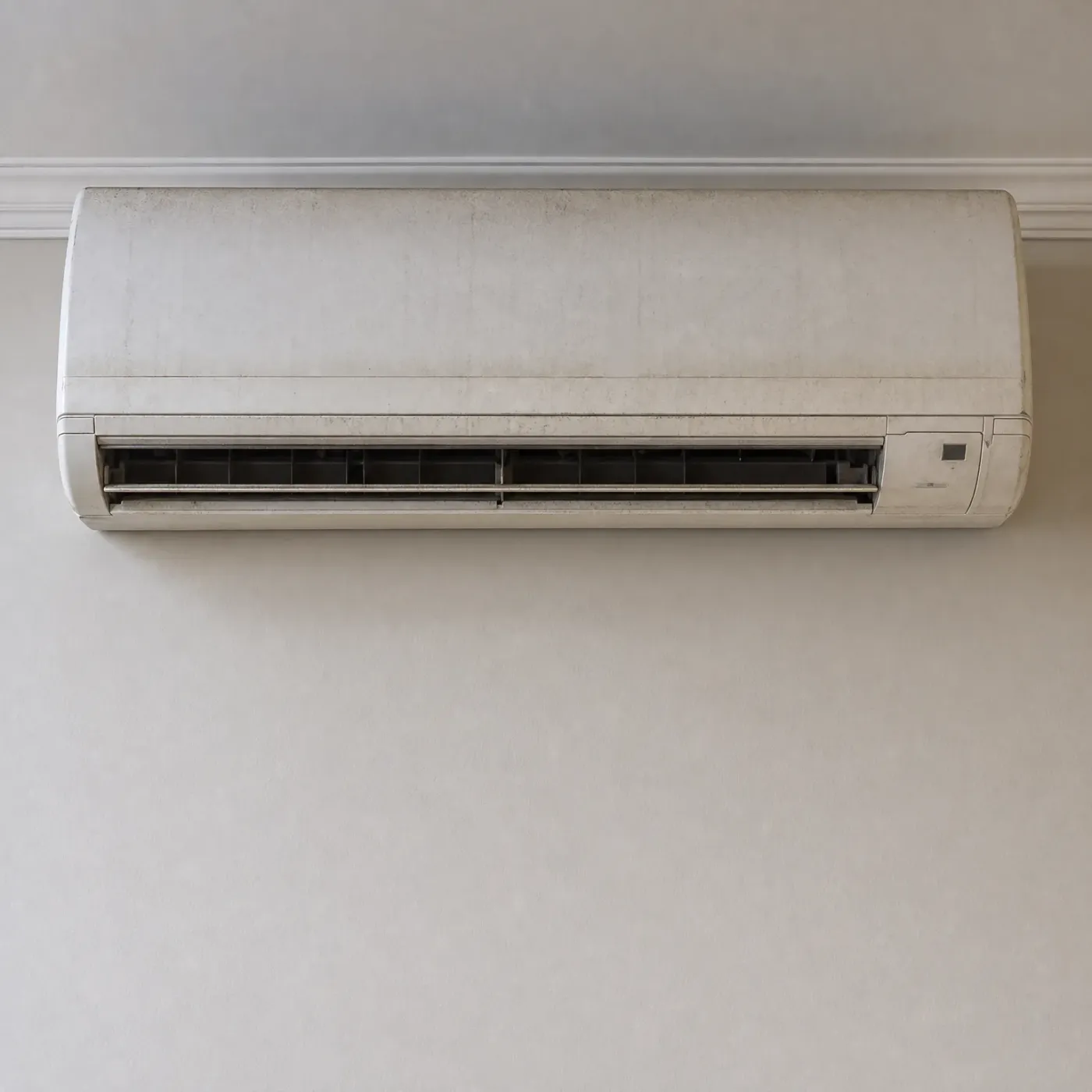
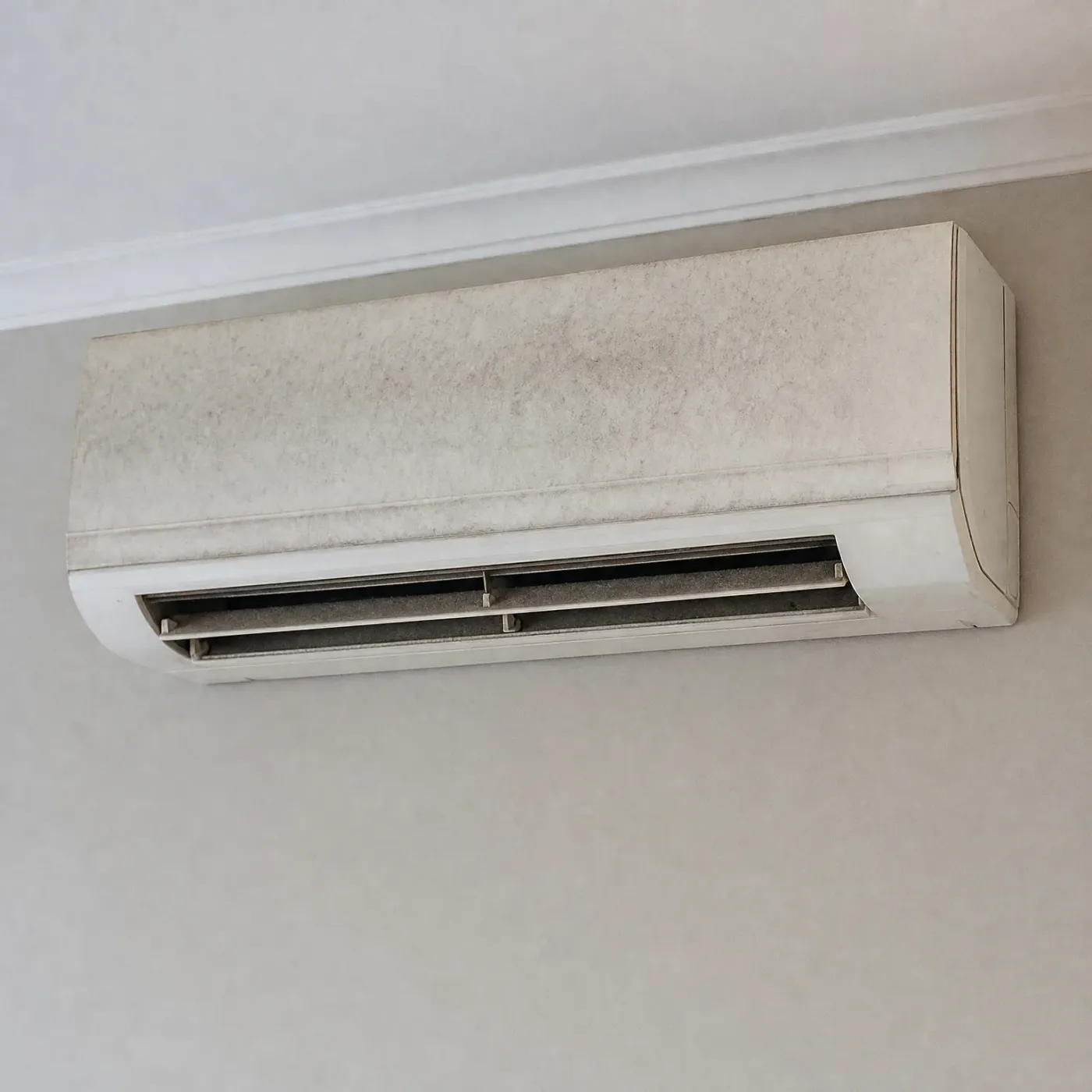
A dusty, discolored white wall-mounted mini-split air conditioner unit installed on a plain beige interior wall below a molding strip.
Left dusty and ignored through winter, the casing shows it and the unit struggles to keep up.
Single-story house with tan horizontal siding and a dark shingled hip roof, fronted by a patchy green and brown lawn and a concrete walkway leading to the covered entry.

That summer dew point above isn't just about the air outside. A mini split running in cooling mode has to wring that moisture out before the room feels comfortable, and at 62°F the coil is working longer on every cycle than it would in a drier climate. That's extra condensate draining off, extra hours the compressor runs, and more chance for the filter and coil to load up with the dust that moisture carries in. By the time winter comes and you're relying on that same unit for supplemental heat, whatever got left behind over the summer is still in there. If you'd rather not find out the hard way, sending the form here puts you in touch with one local contractor who already knows what Iowa summers do to these units, and from there it's off your plate.

NASA POWER T2MDEW county cells weighted by homes

Let someone else find the pro

You've read what the setting should be and what the frost on the coil means. Knowing that doesn't clean the filter or fix a coil that's iced over for good. By the time a mini split in Iowa is still running cold air past where defrost should've cleared it, something past the setting is wrong, and that's a visit, not a thermostat change. Most homes here run gas heat and lean on the mini split for shoulder season and backup, so it doesn't get looked at often, and a season or two of dust catches up with it right when you need it most. Someone who services these units here every winter knows what usually gives out first in this cold and what a normal defrost cycle looks like versus one that's struggling. Send the request through once and it goes to that one local contractor, not a handful of companies calling you back at once. Get it looked at before the next cold snap finds the problem for you.

What that thermostat setting assumes

The low 60s number works when heat actually reaches the room. A mini split pulls heat out of outdoor air even when it's cold, but it can only move that heat through a clean coil and clear airflow. Dust packed on the indoor filter or ice built up on the outdoor coil cuts into that, so the unit runs longer to hit the same number. Setting it right gets you nothing if the equipment underneath can't deliver it. That's why the setting and the coil condition matter together, not one or the other.

Why gas heat changes the math

Most houses here lean on a furnace for the coldest stretches, so the mini split often runs as backup or for shoulder months rather than carrying January alone. That changes how hard it works and how much wear shows up by spring. A unit covering a smaller share of the winter load still needs its filter and coil checked, since dust and ice build up on hours run, not on whether it's the primary heat source. Light duty hides a dirty coil for longer, not forever.

A dusty, discolored white wall-mounted mini-split air conditioner unit installed high on a plain interior wall below a white ceiling molding.
Before you get your mini split maintenance
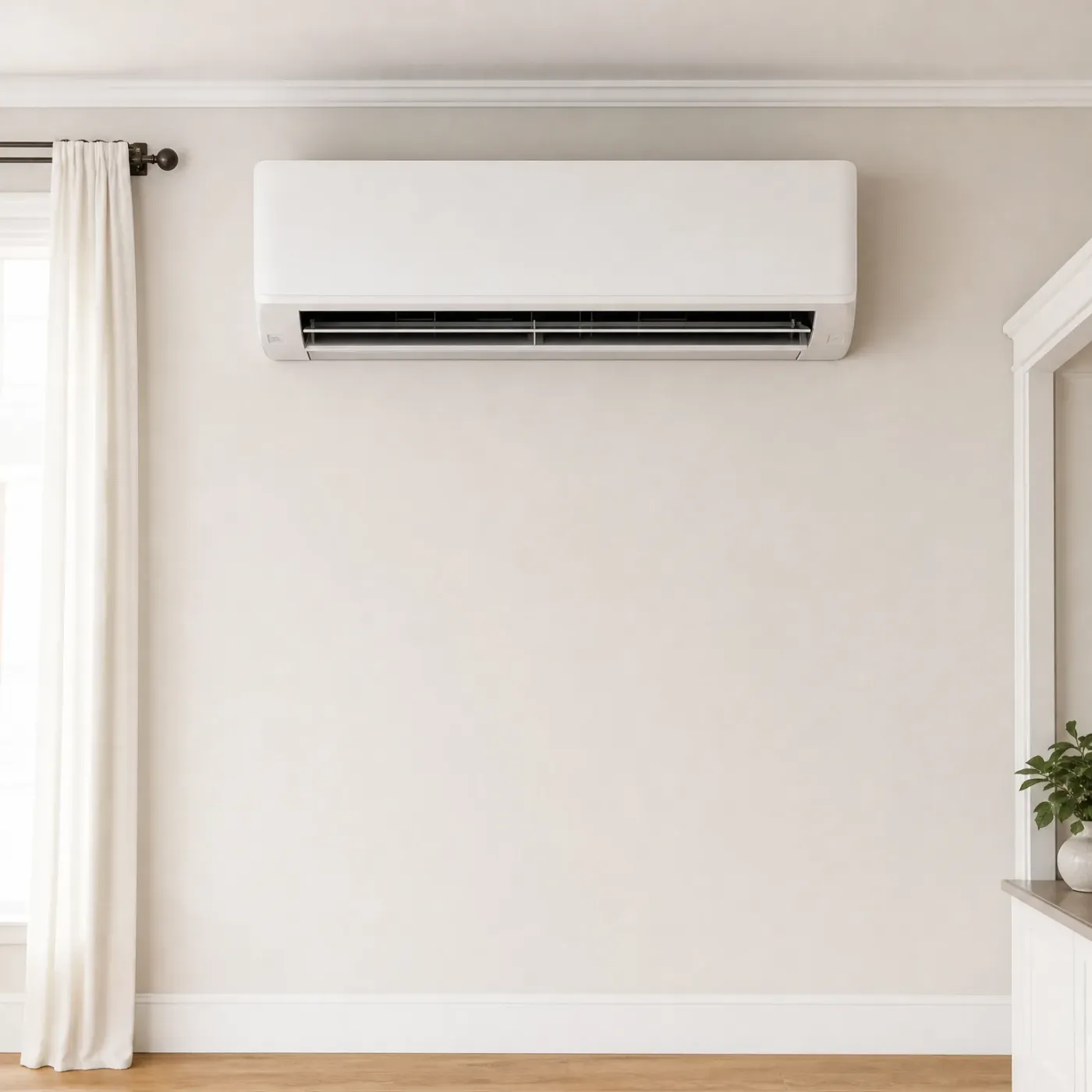
A white wall-mounted mini-split air conditioner on a beige interior wall, with a cream curtain and window at left, a potted plant on a ledge at right, and a wood floor below.
After you get your mini split maintenance

You set the mini split and leave it, figuring it'll run fine as long as it's turning on.

It turns on, but a dirty coil or a weak filter makes it work longer for the same heat, and that shows up on your bill before it shows up as a breakdown.

Power costs 13.62 cents per kilowatt-hour statewide

At under 14 cents a kilowatt-hour, running the mini split for backup heat or shoulder-season days doesn't push your bill much. A clean coil and clear filter keep it pulling heat efficiently, so you're paying that low rate for actual warmth, not for a unit working harder than it should.

EIA-861 2025 statewide residential average

The setting for an Iowa winter is somewhere in the low 60s, held steady instead of bounced around, with gas heat carrying the rest of the load on the coldest days. That number only pays off if the unit can actually move the heat it's pulling from the outdoor air. A clean filter and a clear coil get you that low rate on your power bill. A dusty one gets you a mini split that runs longer, cycles more, and still leaves the room short of where you set it. You already check on small things before they turn into big ones, so you've probably seen the dust building on that filter screen before it became a problem. A local contractor who works on these units every winter can look at the coil, the filter, and the defrost cycle and tell you exactly where yours stands right now.

A smiling man with dark curly hair in a navy t-shirt sits on a gray couch indoors, with a large-leafed plant and a window in the background.
A bearded man in a plaid flannel shirt stands in a kitchen looking out a window toward snow-covered shrubs, with a steaming mug on the windowsill and potted plants on a shelf behind him.

One request and it's handed off

A mini split set to the low 60s only works if the coil and filter are clean enough to move that heat. One contractor, licensed and local, will look at the unit, running mini splits through Iowa winters every season and knowing what fails first when gas heat is carrying most of the load and the mini split only runs a few months. Send the request and that search stops being your job. You get one call, not five, and one answer about what your unit actually needs before the cold sets in for good.

Find a local pro

Only one pro gets your request, so you hear from one company.

You only hire the pro if you want to.