
Mini split frozen up in Waterloo, IA

Once you send the form, finding a pro is off your list.

Send it today

Ice on the outdoor unit means it's pulling heat from air that's colder than the system can handle without help, and in a Waterloo winter that happens a lot once temperatures drop into the teens and lower. Every mini split defrosts itself on a cycle, reversing briefly to melt what builds up on the coil, then switching back to heating. Frost that won't go away even after hours of running means that cycle isn't working right. Usually it's a defrost sensor or control board problem, a fan that's slowed down and can't move enough air across the coil, or a refrigerant charge that's dropped low enough that the coil runs colder than it should. Running the unit while it's iced up won't clear it and can strain the compressor. It needs someone to check the defrost cycle itself and find out why it isn't firing when it should, not just knock the ice off and send you on your way.


A middle-aged man with grey hair and a beard, wearing a grey knit sweater, sits on a light sofa in a sunlit living room with a houseplant, wooden cabinet and framed landscape picture behind him.
A man with greying hair and a beard in an olive sweater sits on a sofa in a living room, looking to his left, with an armchair, round side table and large glass doors onto trees behind him.
A gray-haired bearded man in a dark blue shirt over a white t-shirt sits on a leather sofa in a living room with built-in shelves, a floor lamp, an armchair and large windows, looking off to the side.
A man with gray-brown hair and stubble in a dark sweater sits on a light-colored sofa in a living room, looking off to the side, with a houseplant, framed picture, shelving and a sunlit window behind him.

Why is ice building up on my mini split?

Look at the outdoor unit and you'll likely see frost or a solid sheet of ice across the coil, maybe thick enough to cover the fan blades. Inside, the head on the wall might be blowing weak air, or air that isn't warm even though the unit sounds like it's running fine. You may hear it cycling on and off more than usual, trying to defrost itself and failing to catch up. Some homeowners notice water pooling under the indoor unit once the ice starts melting on its own. Left alone through a stretch of single-digit nights, that ice can keep building until the system can't move enough air to heat the room at all, and the strain on the compressor trying to push through it isn't something you want repeating all winter.
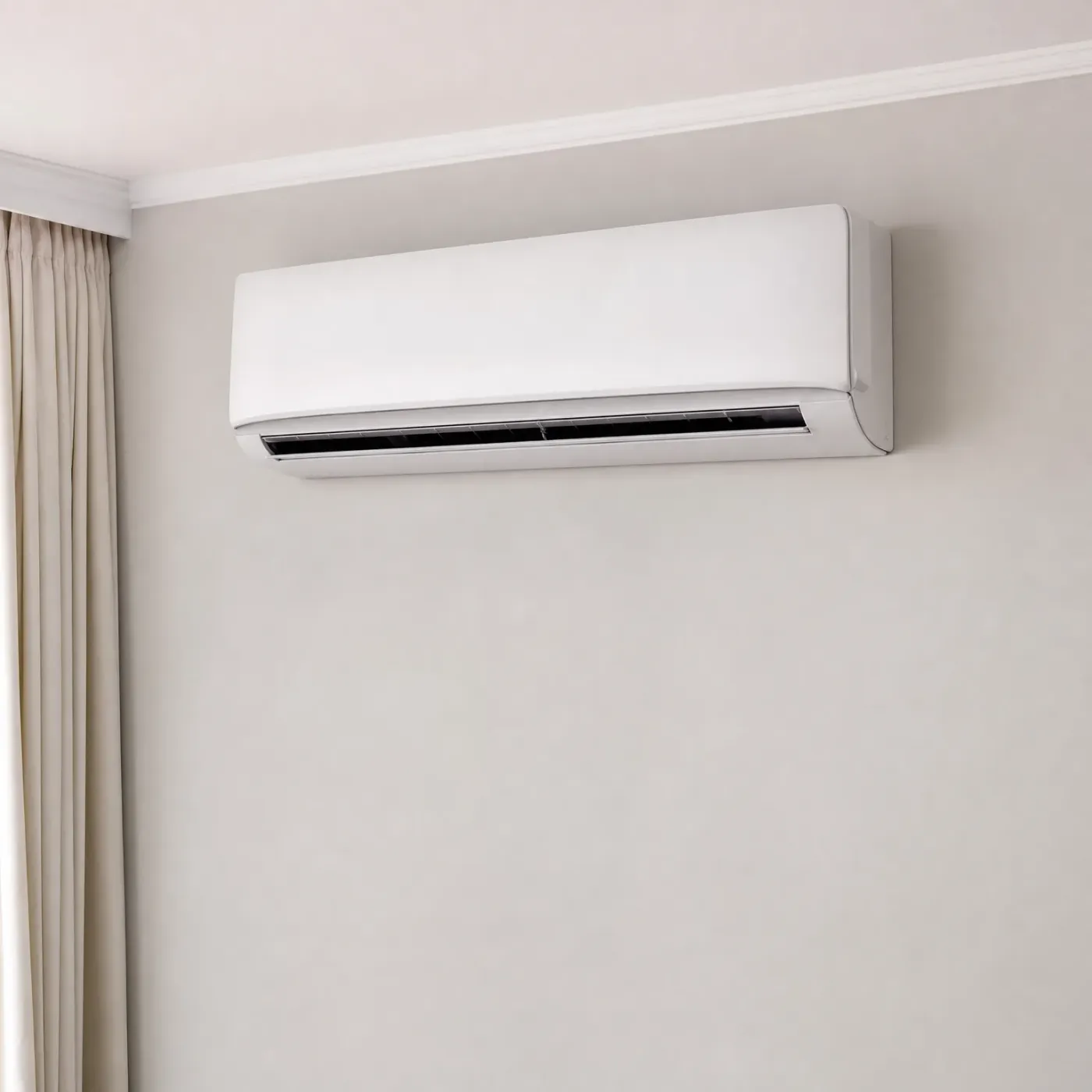
A white wall-mounted mini-split air conditioner near the ceiling of a room with light gray walls, white crown molding, and a beige curtain at the left edge.

Running the way it should

Air moves out of the head steady and warm, no rattle, no drip. The coil behind the front panel stays clear because the defrost cycle is keeping up with the cold outside. Nothing on the wall around it shows wear.
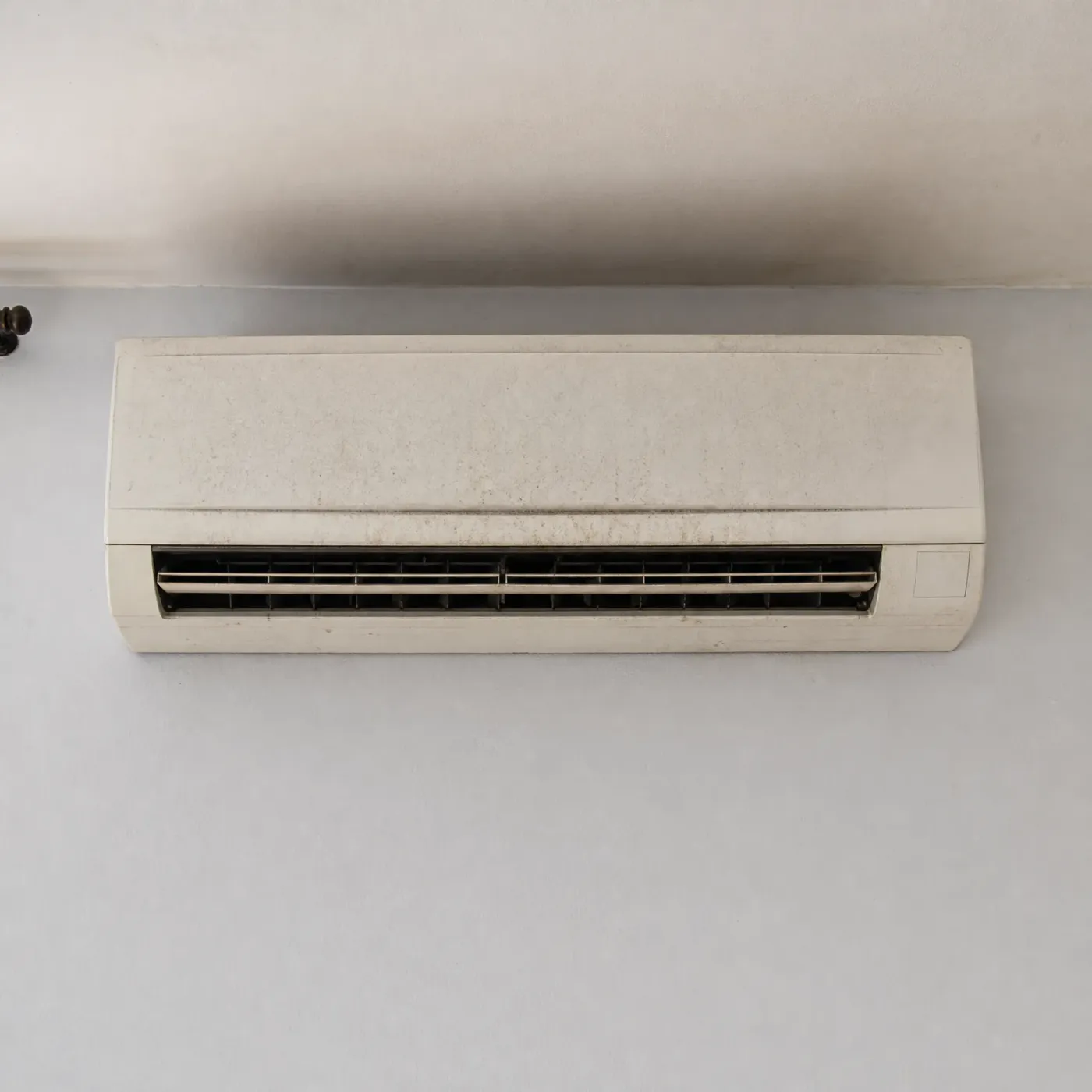
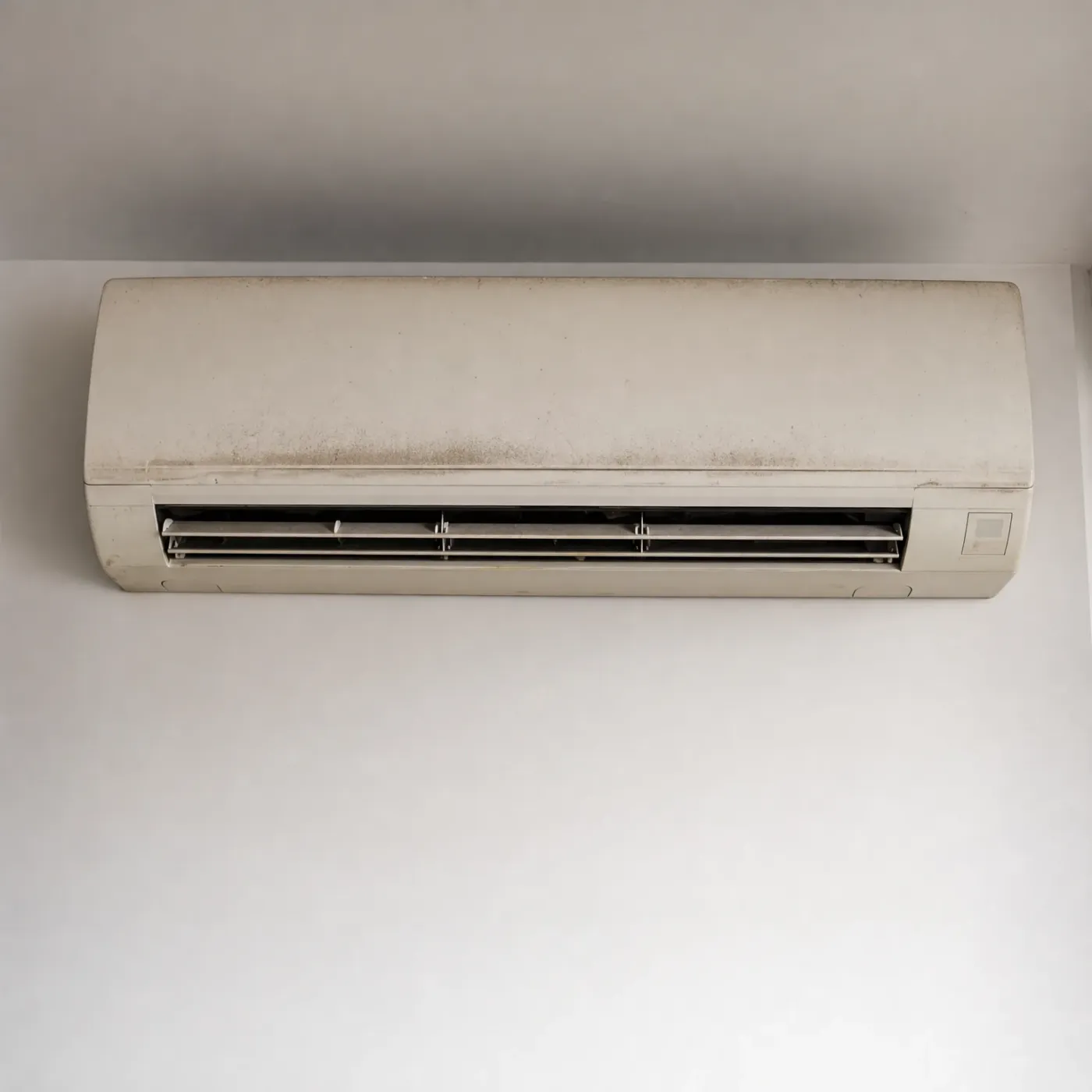
A dusty beige wall-mounted mini-split air conditioner indoor unit installed high on a plain light-colored wall below the ceiling.

Frozen up and struggling

Dust has built up across the face of the unit, and that staining above it points to condensate running somewhere it shouldn't. A mini split caked like this can't shed heat the way it needs to, and ice on the outdoor coil gets worse from here, not better.

Call It In or Wait It Out

Call it in

  • A tech can check the refrigerant charge with gauges, something you can't do from the wall unit.
  • If the defrost board or sensor has failed, that's a part swap a homeowner can't source or install safely.
  • Running it frozen for days can push liquid refrigerant back into the compressor, which is the expensive part to replace.
  • A local tech who works on these units all winter has seen which part usually fails first in weather this cold.
  • Once it's diagnosed, you know if this is a one-time fix or a sign the system is undersized for a Waterloo winter.

Wait it out

  • Turning the system off and letting the ice melt on its own costs nothing but time and patience.
  • If the ice is thin and this is a one-off cold snap, it may clear on its own once temperatures climb a bit.
  • You risk forcing it back on before the coil is fully clear, which just builds the ice up again.
  • Without knowing why it froze, there's nothing stopping it from happening again the next cold night.
  • If the cause is low refrigerant or a stuck reversing valve, no amount of waiting fixes that.
  1. Outdoor temperature drops and the coil runs colder than the air around it

  2. Moisture in the air lands on the cold coil and turns to frost

  3. A sensor on the coil reads the temperature and tells the board to defrost

  4. The reversing valve switches and sends hot gas through the outdoor coil

How much does Waterloo weather ask of a mini split?

  • Cooling runs June through August

    Cooling runs June through August. That's the stretch your mini split handles the muggy stretch, and the only months its coil deals with heat instead of cold.

  • Heat runs October through May

    Heat runs October through May. That's eight months where the outdoor unit works against cold air, and where ice on the coil becomes a real problem if the defrost cycle can't keep up.

  • Power here costs 11.96 cents per kilowatt-hour

    Power here costs 11.96 cents per kilowatt-hour. A mini split already costs less to run than most heating, so a system that's frozen and struggling is losing you that advantage.

NOAA nClimDiv 1991-2020 · EIA-861 2025

A woman with shoulder-length graying brown hair in a cream knit cardigan sits in a dark armchair indoors, looking off to the side with a slight smile, with a shelf, window and houseplant blurred behind her.
A woman and a child wrapped together in a thick knitted beige blanket on a sofa, both with eyes closed, beside a lit table lamp in a dim room.
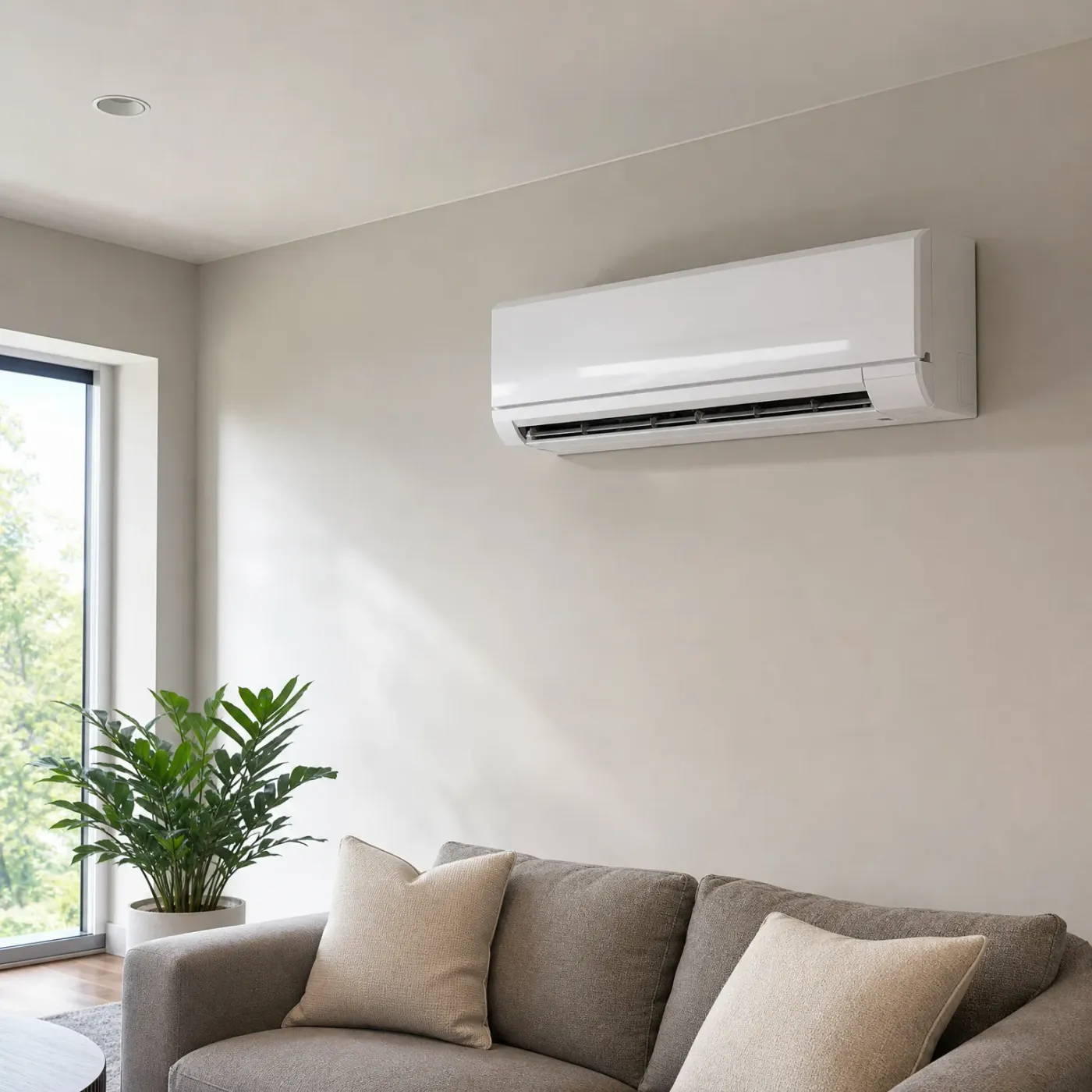
A white wall-mounted mini-split indoor unit high on a light beige interior wall above a gray sectional sofa with beige cushions, with a potted green plant and a window at left.

Let someone else find the pro

A licensed pro who repairs mini splits in Black Hawk County gets your request.

After you send the request, you're done searching.

Find a licensed mini split pro

Asking costs nothing, and the choice to hire stays yours.
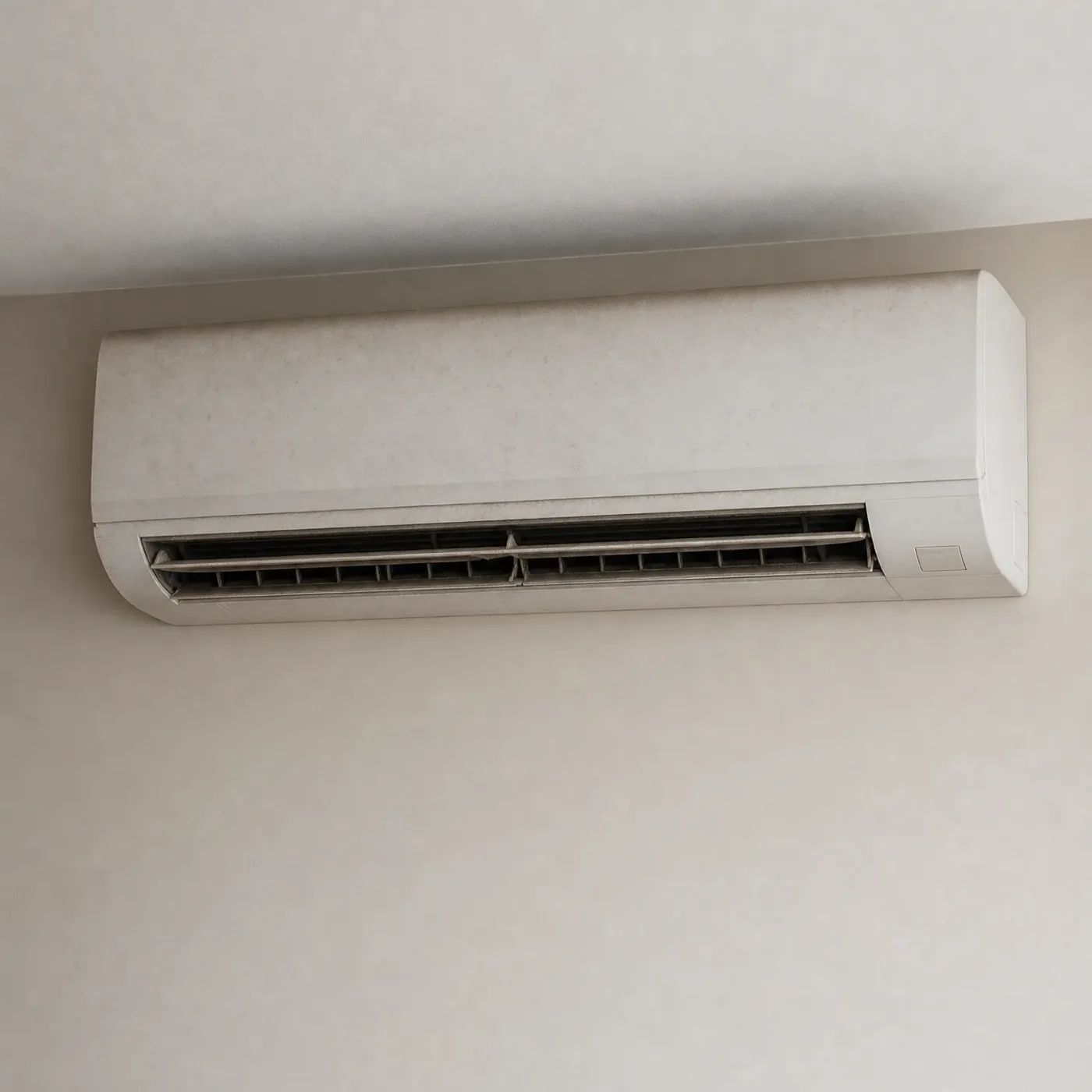
A white wall-mounted mini-split air conditioner indoor unit installed near the ceiling on a plain light-colored wall, with its horizontal outlet vent and louvers visible.
Before you get your mini split repair
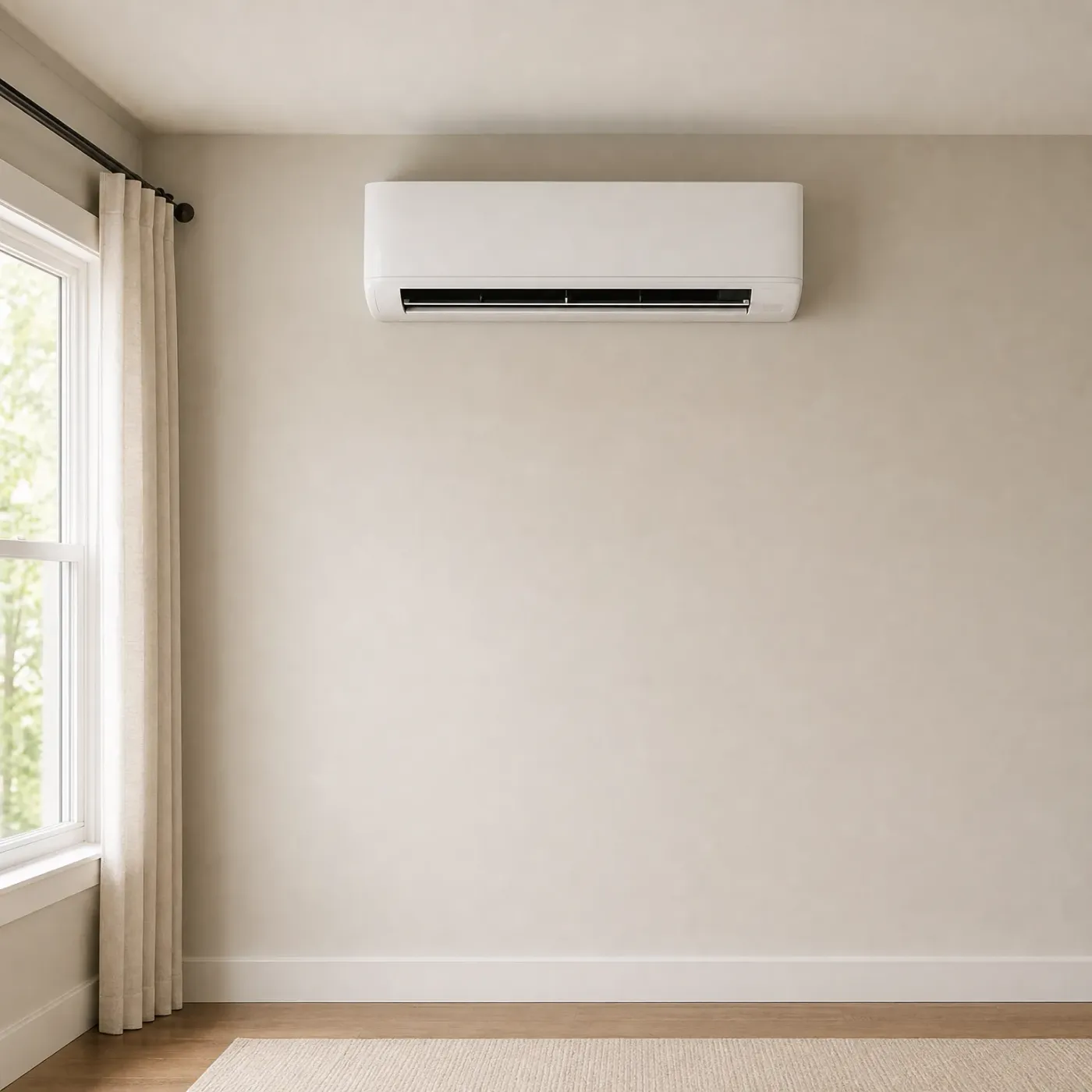
A white wall-mounted mini-split air conditioner on a beige interior wall, with a curtained window on the left and wood flooring with a light rug below.
After you get your mini split repair
A two-story cream-colored house with a covered front porch and gray shingled roof, fronted by a concrete walkway crossing a green lawn, with large leafy trees on both sides in late-day light.

The page above covers what ice on the coil means in the cold months, but summer asks something different of the same system. Black Hawk County air carries a dew point near 62°F through June, July and August, which is heavy for a mini split to wring the moisture out of. The indoor coil has to stay cold enough to pull that water out of the air, and when it's working against air that wet for hours at a stretch, you'll see water pooling under the indoor head or dripping where it shouldn't, sometimes alongside the same frost pattern on the outdoor unit. A mini split struggling with humidity can ice up in July the same way it does in January.

NASA POWER T2MDEW
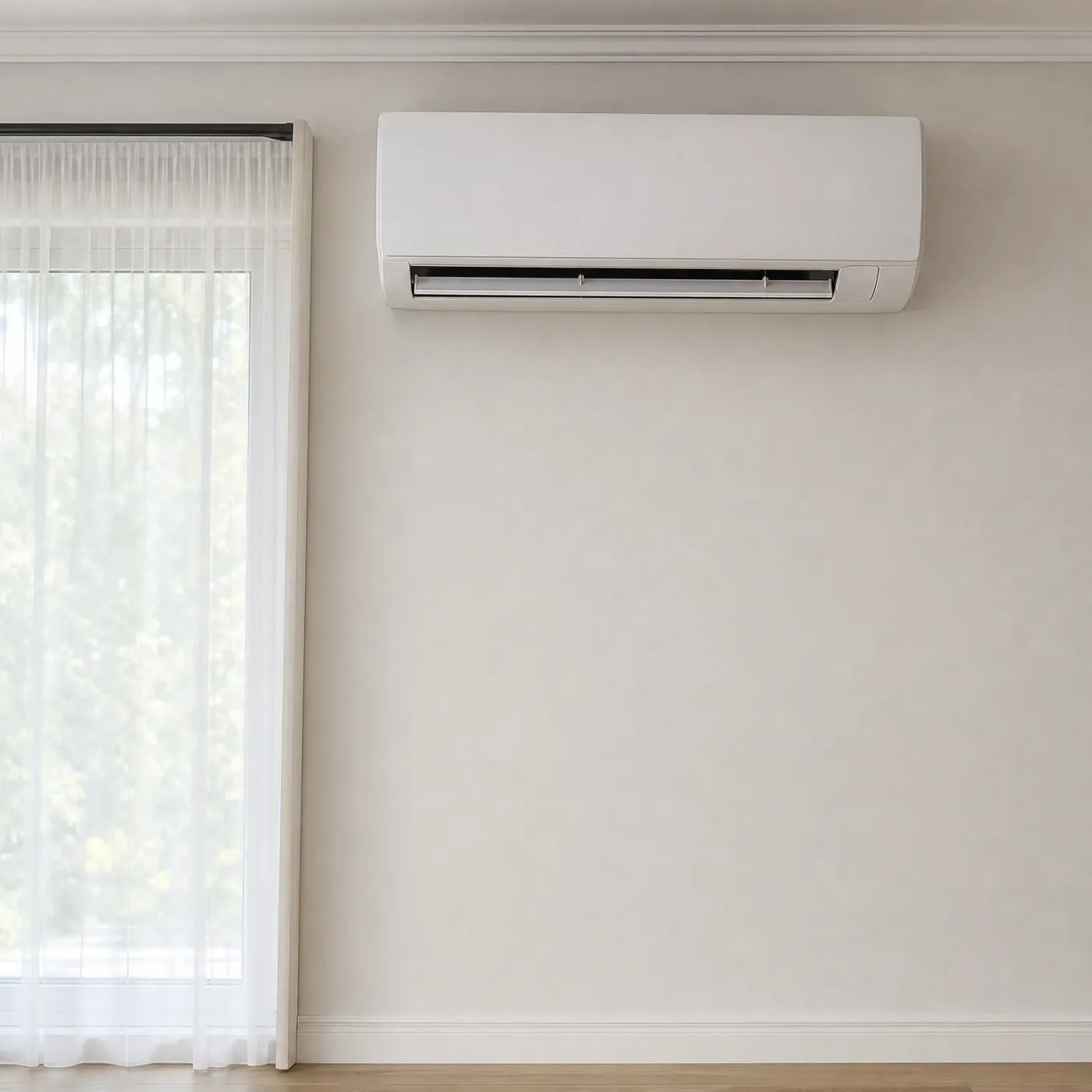
A white wall-mounted mini-split air conditioner on a beige interior wall, next to a window with sheer white curtains and green foliage outside.
Air comes out of the head warm and steady, and the coil outside stays clear under light frost at most.
A dusty, discolored wall-mounted mini-split air conditioner indoor unit on a plain white wall, with its horizontal louvers and vent grille visible.
Dust and grime cake the top and vents, a sign airflow is choked long before ice ever builds.

Cooling runs June through August

Three months of cooling is a short stretch next to the cold months your mini split works through. When freezing shows up on the coil outside this stretch, it's almost always a winter problem, since summer rarely runs the outdoor unit cold enough to frost over on its own.

NOAA nClimDiv 1991-2020

Where this leaves you

  • Ice on the coil in a Waterloo winter means the defrost cycle isn't keeping up, not that the system is simply overworked.
  • A frozen outdoor unit left running can push liquid refrigerant back into the compressor and shorten its life.
  • Checking refrigerant charge and testing a defrost sensor both call for gauges and parts a homeowner can't get to from the wall unit.
  • The request goes to one licensed contractor who works on mini splits through every Black Hawk County winter and knows what usually fails first.
  • You won't field calls from a handful of companies bidding for the job, just the one who's coming to look at it.
  • Once the form is in, finding someone who can actually fix it stops being something you have to chase down yourself.

Ice on the coil has one real explanation: the defrost cycle fell behind, and the system needs a hand to catch back up. That's not something a space heater pointed at the unit or a few hours of shutting it off will fix for good, not if the cause is a weak sensor, a stuck reversing valve, or refrigerant that's low. Those all need someone with gauges and the part in hand, standing in front of the outdoor unit in the cold to find out which one it is.

That's the piece you can hand off. The form on this page goes to one licensed contractor who works in Black Hawk County, someone who's already seen what a January in Waterloo does to these systems and what tends to give out first when it does. You're not putting your number out to a handful of companies and fielding calls all afternoon. One contractor looks at the job and comes to you.

The ice itself isn't the damage. What it risks is the compressor, if the unit keeps running flooded while nobody's looked at why. Getting someone out to shut off the guesswork and find the actual fault is what stops that risk from turning into a bigger repair. From here, that part isn't on you anymore.

A shingled two-story house with lit windows and stone accents at dusk, with a stone paver walkway and landscape lighting leading past ornamental grasses toward a calm bay under an orange and blue sky.

Mini Split Repair

One request and it's handed off

Step 1 of 3: Equipment
  • A living room with a light upholstered sofa holding textured cream, blue, and blue-patterned cushions and a fringed throw, a wooden coffee table with a woven tray holding a potted plant and metal jar, a dark ceramic table lamp on a side table, and a framed landscape picture on the wall.
    • A Black Hawk County pro who repairs mini splits gets your request.
    • Get matched with someone who does this kind of work in Black Hawk County.
  • A beige upholstered armchair with a cushion and knit fringed throw sits in a corner beside a window with linen curtains, a wooden side table with a ceramic lamp, and a framed picture on the wall.
    • Send the request and finding a pro stops being your problem.
    • After this form, you can stop searching for a mini split pro.
  • A cream upholstered sofa with gray and orange cushions and a knit throw sits by a window, beside a potted tree in a woven basket and a wooden coffee table holding a tray, small vase with greenery, and a cup.
    • Explain the job once and skip repeating it on every call.
    • Skip searching for a mini split pro and answer a few questions instead.
  • A beige upholstered armchair with a dark green knit throw and cushion sits by a white paneled wall, beside a wooden stool holding a potted plant near a window, with a large leafy plant in a woven basket at left.
    • The pro who gets in touch is licensed in Iowa and works in Black Hawk County.
    • The pro who reaches out is licensed in Iowa.