Mini split light blinking in Davenport, IA

Step 1 of 3: Equipment

A blinking light on your mini split is the system telling you what's wrong, not just that something is wrong. Each brand uses its own pattern of blinks, so the same flash count means something different on a Mitsubishi than on a Fujitsu or an LG. Most often it points to one of a few things: a frozen coil, a clogged filter restricting airflow, a drain line backing up, or a refrigerant level that's off. In a Davenport winter, ice on the outdoor unit is a common cause, since a heat pump running hard in the cold can frost over faster than it defrosts. Count the blinks and check your owner's manual or the panel inside the unit, which often lists the codes. That tells you roughly what's failing, but clearing it, whether that means defrosting a coil, clearing a drain, or adding refrigerant, takes a technician with the right gauges and parts on hand.

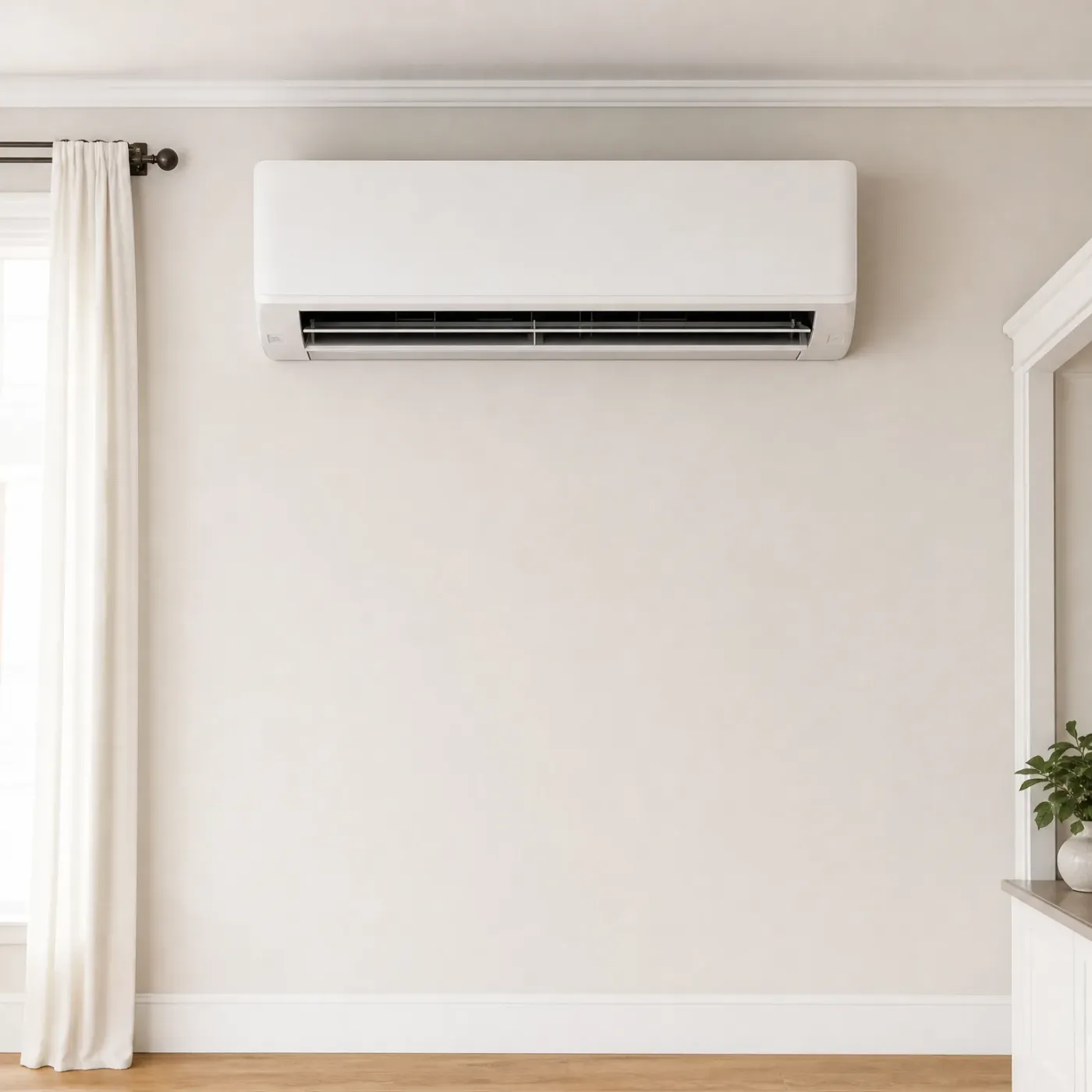
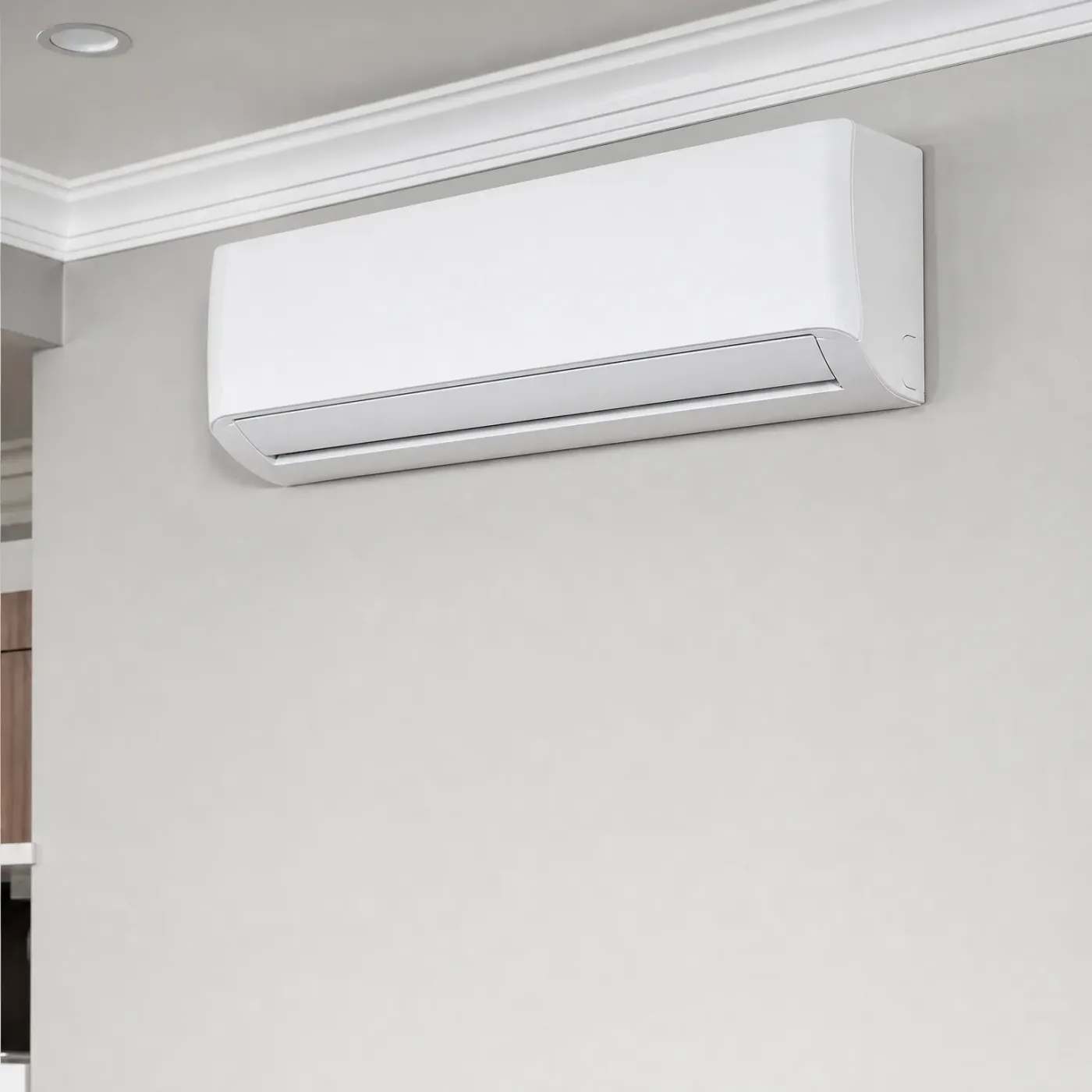
A white wall-mounted mini-split air conditioner installed high on a light gray interior wall below a white crown molding and ceiling with a recessed light.

Running steady

A steady light with no blinking means the mini split is reading its own cycle as normal. Set temperature, fan running or cycling off on its own schedule, no flash pattern interrupting it. That's the baseline you want through a Davenport summer and the stretch of hard winter that follows.
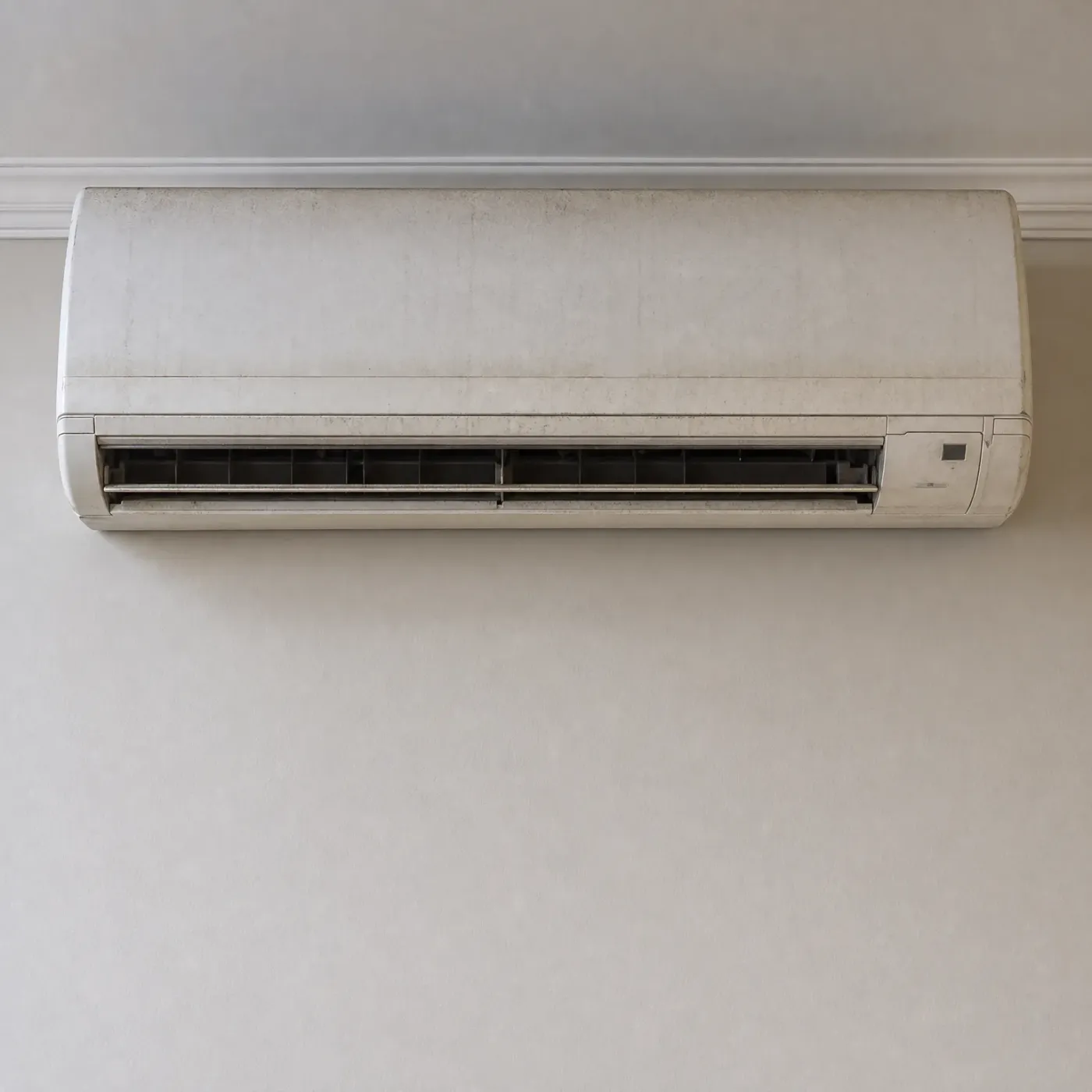

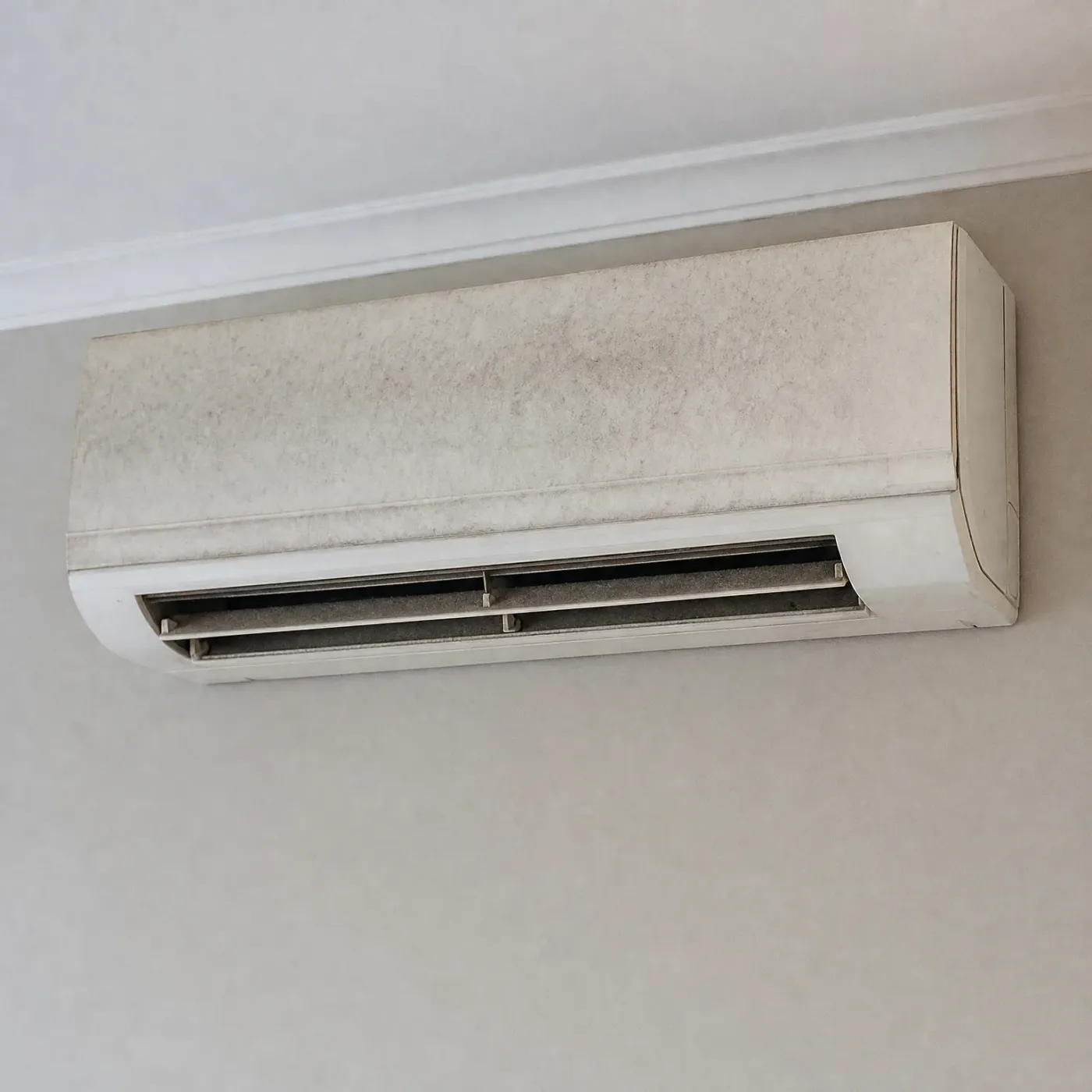
A dusty, discolored white wall-mounted mini-split air conditioner unit installed on a plain beige interior wall below a molding strip.

Flashing and aging

A dusty, discolored case with the vents left open and a blinking light together point to a unit that's been running hard without much attention. The blink is the fault code. The grime on the casing tells you this has probably been going on for a while before anyone noticed.

Still Running or Shut Down

Blinking light, unit still runs

  • The indoor head still blows air and the outdoor unit still cycles, but the light keeps flashing a pattern it wants you to notice.
  • A dirty filter or a blocked condensate drain can trigger a blink code well before the system actually shuts itself down.
  • Some codes point to a sensor reading that's off, which can mean the room temperature reads wrong without stopping cooling or heat.
  • Ice on the outdoor coil during a Davenport cold snap can set off a blink code while the indoor fan keeps running on its own.
  • Left alone, a system still running on a fault code tends to run harder to compensate, which shows up on the power bill before it shows up as a breakdown.

Blinking light, unit shut down

  • No air from the indoor head and the outdoor fan not spinning means the system has stopped itself rather than just flagging something.
  • A refrigerant leak low enough to trip a safety shutoff will usually stop the unit outright instead of letting it keep cycling.
  • A failed compressor or a tripped breaker inside the outdoor unit cuts the system off completely, and the blink count is the only clue left.
  • Through a Scott County summer, a full shutdown means no cooling at all, not just a system running less efficiently.
  • A code paired with a dead unit usually means a part needs replacing, not just a filter change or a drain clear.
A two-story house with tan horizontal siding and a dark shingled roof, fronted by a mowed lawn, trimmed shrubs, leafy trees on both sides, and a concrete walkway leading from a wet sidewalk to the white front door.

A summer dew point averaging 63°F across Scott County means the air your mini split pulls in is already heavy with moisture. That coil has to work harder to wring the water out before it can cool the air, and a blinking light often shows up right when that load is highest, on the muggiest July afternoons rather than a mild June morning. If the drain line is running slow or the filter is coating up, sticky air like this is what pushes the system past the point where it can keep cycling quietly and starts flashing instead.

NASA POWER T2MDEW

A smiling man with dark curly hair in a dark green henley shirt sits on a light sofa in a living room with large windows, a lamp, shelving, a stone fireplace, and a bowl of popcorn in the foreground.
A smiling man in a dark long-sleeved henley shirt sits on a beige sofa in a living room, with a bowl of popcorn and a remote on the table in the foreground and shelves, a lamp, and a doorway behind him.
A smiling man with graying hair and stubble in a blue henley shirt sits on a gray sofa with cushions in a living room, with a bowl of popcorn on a wooden table in the foreground.
A smiling man in a dark green long-sleeve shirt reclines on a sofa in a dimly lit living room, with a bowl of popcorn on a side table in the foreground and a bookshelf, lamp, and houseplant behind him.

How many months a year does a blinking light actually matter here?

  • Cooling runs June through August

    Cooling runs June through August, so a blink code in July is interrupting the stretch your mini split works hardest.

  • Heat runs October through May

    Heat runs October through May, eight months when a blinking light means the house has no backup if the unit shuts itself down.

  • Power here costs 12.22 cents per kilowatt-hour

    Power here costs 12.22 cents per kilowatt-hour, cheap enough that a mini split blinking from a dirty filter or low charge isn't about to save you money by running inefficiently.

NOAA nClimDiv 1991-2020 · EIA-861 2025

A white wall-mounted mini-split air conditioner on a beige interior wall, with a cream curtain and window at left, a potted plant on a ledge at right, and a wood floor below.

No light, no flash

This is what a mini split looks like when it has nothing to report. The wall plate sits clean, the light steady, air moving through the room on its own schedule. Nothing on the unit is asking for attention.

A dusty, discolored white wall-mounted mini-split air conditioner unit installed high on a plain interior wall below a white ceiling molding.

Dust doing the talking

Grime like this across the top panel and vents builds up over months, not days. Airflow through the coil gets harder, and that strain is often exactly what trips the blink code in the first place.

What are you noticing in the room right now

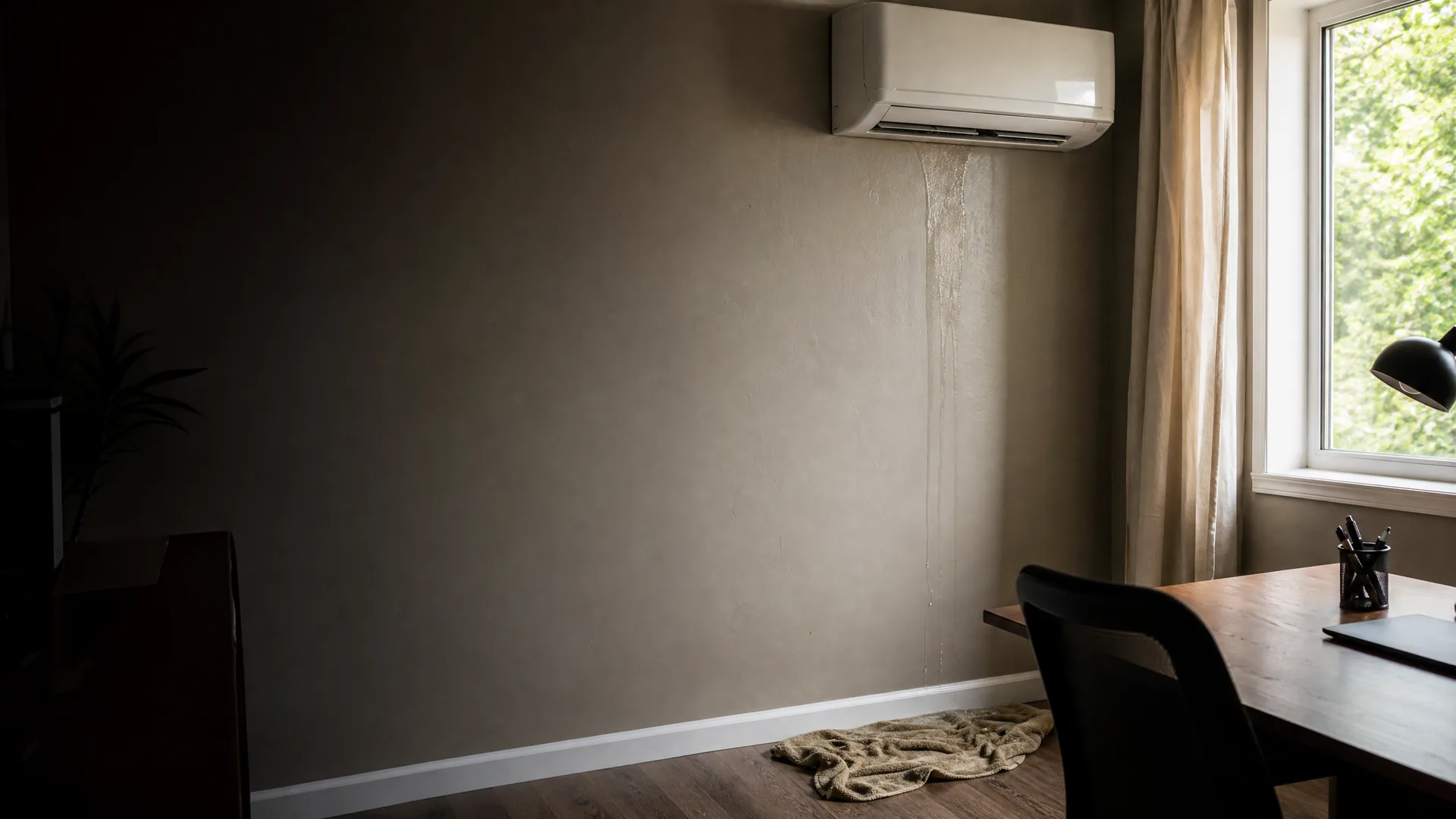
You probably walked past the wall unit and caught the light out of the corner of your eye. Maybe the room upstairs isn't cooling the way it did last week, or you've noticed the air coming out feels more like room temperature than cold. Sometimes there's a faint musty smell near the vent, or a thin line of water on the wall below the unit. The fan might cycle on and off more than it used to, or run constantly without the room ever catching up. None of that is unusual to notice before the light starts blinking. Left alone through a Davenport summer, a coil that can't keep up or a drain that's backing up tends to get worse, not better, and can mean water finding its way into the wall or floor below.

A wall-mounted mini-split air conditioner leaking water down a beige interior wall, with a towel on the wood floor below, beside a desk, chair and curtained window.

It's late afternoon and you're at your desk, trying to get through email before dinner. The mini split above the window has been blinking since lunch, and you've mostly tuned it out. Then you notice the wall below it looks dark, a streak running down from the unit toward the baseboard. You get up to look and the drywall is wet to the touch. You grab a towel from the hall bathroom and lay it on the floor under the drip, because the carpet is already damp. Outside the window, Davenport is sitting in another sticky August afternoon, and the unit is still blinking the same pattern it was an hour ago.

Hand off the mini split problem

Explain the mini split problem once instead of to every shop in Scott County.

There's no charge for the request.

You can wait and watch it, see if the blink pattern stops on its own or turns into something worse, and check the filter yourself before deciding it needs a contractor.

Or you can send the details once and let someone who knows the brand's blink codes sort out whether it's a clogged drain or a refrigerant problem, so you're not the one calling around Davenport trying to find out.

Cooling runs June through August

Three months is a short window for a system that has to carry the whole load of a Davenport summer. If your mini split starts blinking in July, it's doing it mid-stretch, not at the edges, so the problem doesn't have much room to wait before it affects the next hot week.

NOAA nClimDiv 1991-2020

Check it yourself first

Pull the filter and look at it against a light. If you can't see light through it, that's likely what triggered the blink. Rinse it, let it dry, put it back in, and watch the light over the next cycle. Check the outdoor unit too. Leaves, grass clippings or snow packed against the coil make the system work harder and some brands will flash a code for restricted airflow outside before anything inside fails. Neither check requires opening the unit or touching refrigerant lines. If the light clears after a clean filter and a clear outdoor coil, you've found it. If it keeps blinking with both clean, the cause is inside the system somewhere you can't see.

When it's past what you can fix

A blink pattern that continues after the filter's clean and the outdoor unit's clear points to something electrical or mechanical, a sensor reading wrong, a drain pump that's failed, a refrigerant level that's off. That's not something to keep testing by trial and error, especially mid-summer when the system is running most of the day. Rather than calling around Scott County asking who works on your brand, sorting through quotes, and explaining the blink pattern over again to each one, you can send the details once. What the light's doing, how long it's been blinking, the brand if you know it. Someone who knows that brand's codes takes it from there.

A woman in a dark knit turtleneck sweater reclines on a couch under a cream knit blanket, looking down at an open book, with a lit table lamp and framed pictures behind her.
A smiling middle-aged man in a dark green sweater sits at a candlelit table with wine glasses and a plate of greens in a dimly lit interior.

Where this leaves you

  • A blinking light means the mini split has flagged something specific, and the brand's own code tells you what it found.
  • A dirty filter or blocked condensate drain explains a lot of blink codes, and both are worth checking before anything else.
  • Cooling carries the load June through August and heat carries it October through May, so a blink code rarely lands at a convenient time.
  • A unit that keeps running while it blinks is still worth sorting out, since the code usually points to something getting worse, not better.
  • Water staining near the wall unit or a line that won't stop blinking after a filter check points past what you can fix from the living room.
  • Matching the blink pattern to the right fix means knowing the brand, which is the part a reader shouldn't have to look up alone.

A blinking light is information, not a verdict. It's the mini split telling you, in its own brand's language, what it caught. Sometimes that's a filter you can pull and rinse tonight. Sometimes it's a drain line backing up behind the wall, or a code that means the system needs a gauge set and a trained eye to sort out. You won't know which until someone reads the pattern correctly, and that reading depends on knowing whether you've got a Mitsubishi, a Fujitsu, an LG, or something else on the wall.

What you do know is the timing isn't neutral. Cooling here carries the load from June through August, and heat takes over from October through May, which leaves the system working hard most of the year. A blink code tends to show up mid-stretch, not at some slow point where it's easy to ignore.

If you've already checked the filter and the drain and the light is still going, or if there's staining on the wall below the unit, you're past the point where guessing helps. What usually eats the time isn't the repair, it's finding someone who knows your brand's codes, getting them on the phone, and going through the symptoms again because the last person didn't quite follow. Sending the details once, including the brand and what the light is doing, means that search and that explaining happen without you.

A lit ceramic table lamp with a linen shade sits on a round wooden side table with a small vase of greenery and a dark shallow bowl, beside a beige upholstered sofa with a cushion and knit throw, below a framed artwork on a pale wall.
Corner of a beige linen sofa with a large woven cushion and a fringed knit throw, beside a potted leafy tree in a woven basket against a neutral wall.
Sunlit interior corner with a wood-framed armchair with beige cushions and a striped pillow, a leafy plant in a tall ceramic pot, a window with wood sill showing green foliage outside, and dark wood flooring.
A lit black path light beside a stone walkway leading to a dark front door of a white clapboard house, with shrubs and flowering plants in the bed at dusk.
A covered porch at dusk with a wooden front door, a lit lantern wall sconce on gray horizontal siding, a black rocking chair with a cream throw, a potted white flowering plant, a coir doormat, and a window showing a lit interior lamp.

Finding a pro stops being your job

Fill out one short form instead of calling around.

Hand off my repair

You only hire the pro if you want to.