Get matched with a pro who fixes mini splits in Story County.
A mini split that won't cool in July in Ames is not a small thing to live with. Story County summers get sticky, and once the humidity sets in, a system that's blowing warm air or barely running makes the house hard to be in.
A few things usually cause this. A dirty filter chokes the airflow before it reaches the room. A blower that keeps the indoor coil too cold freezes up and stops cooling at all. A low refrigerant charge, from a slow leak at a fitting, leaves the system working without enough left to do the job. Sometimes the outdoor unit itself is the problem, caked with grass clippings or sitting in full sun with no airflow around it.
Figuring out which one it is means getting eyes on the actual unit, inside and out. That's not something to guess at over the phone.
What happens next is you get matched with one contractor, licensed to work in Iowa and local to Story County, someone who works on mini splits all season here and has seen what tends to go wrong with them in this climate. Not a handful of companies competing for your callback, just the one who's a fit for your system and your situation, reaching out to you directly.
They'll know what to check first based on what you describe, whether that's a system that's iced over, one that runs constantly without cooling, or one that's gone quiet altogether. Mini splits vary by brand and by how they're installed, and a contractor who's worked on them around Ames knows the common failure points without starting from scratch.
From here, the next step is simple. Tell us what's going on with your system, and you'll hear from the contractor matched to your situation.
A mini split that runs but doesn't cool is usually low on refrigerant, or the outdoor unit can't shed heat. Check the outdoor condenser first. If it's caked with grass clippings or sitting in full sun against a wall with no airflow around it, it can't release the heat it's pulling from your house, and the air coming out of the indoor head stays lukewarm no matter how low you set the thermostat. A dirty indoor filter does the same thing from the other end, by cutting off the airflow the unit needs to cool the room. If the unit is icing up on the indoor coil or the outdoor line, that points to a refrigerant leak, and no amount of cleaning fixes that. In Ames, where summer humidity makes a weak system obvious fast, this is worth sorting out before the next stretch of 90 degree days rather than after.
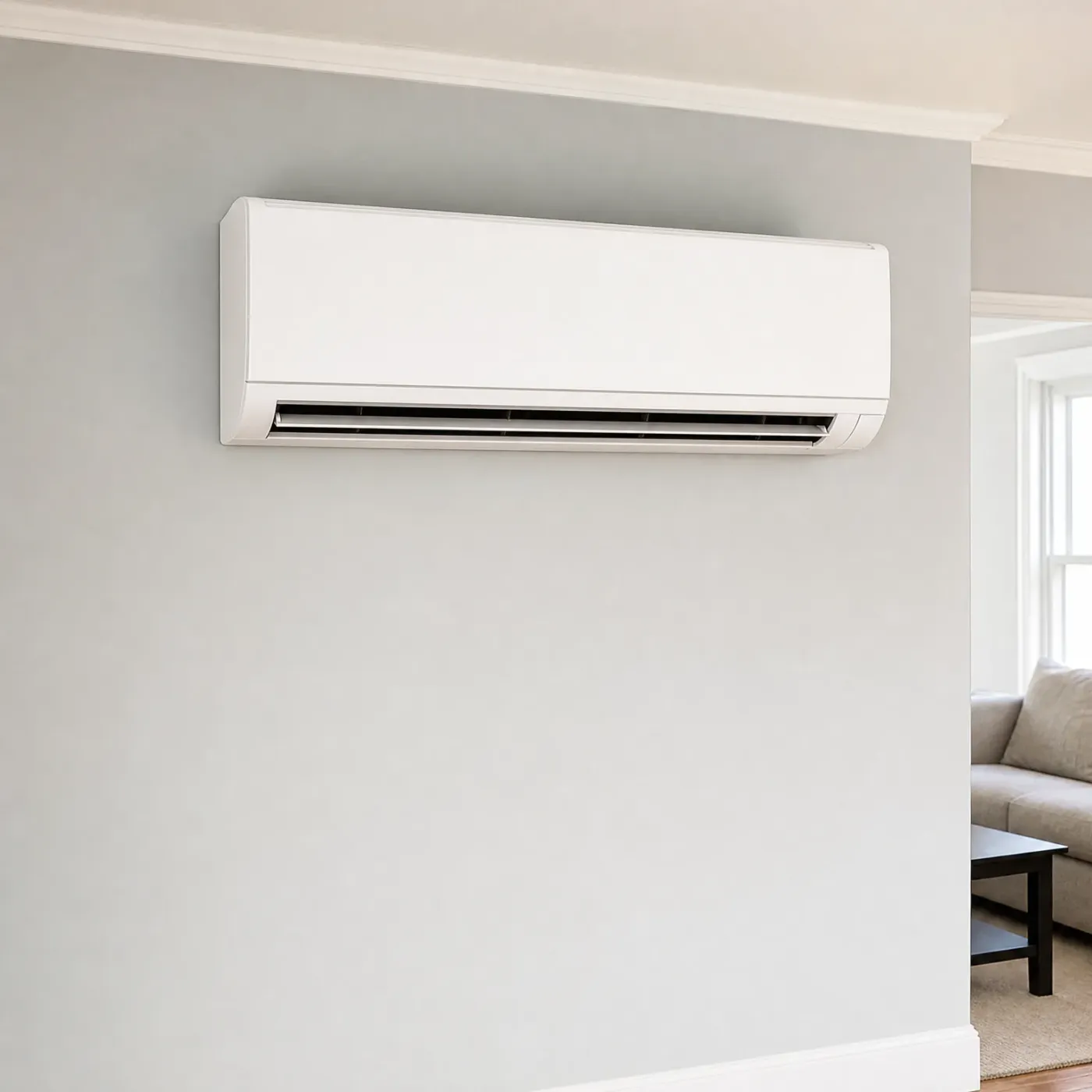
A mini split that's still keeping up looks like this: steady airflow, a clean white casing, nothing blocking the vent.
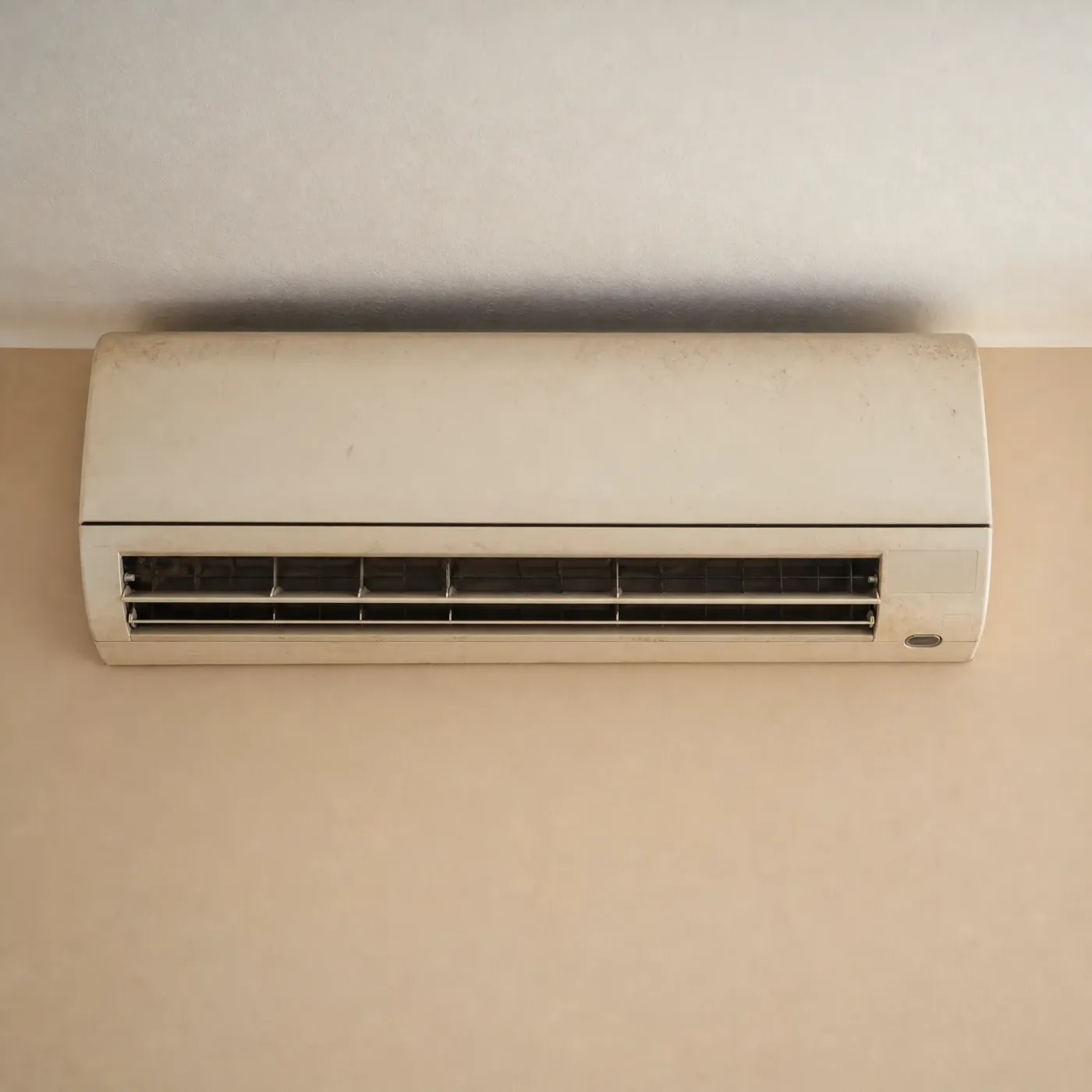
Yellowing and a layer of dust on the casing like this usually mean the filter hasn't been cleaned in a long time.
How much should your mini split be working in Ames?
Cooling runs June through August
Three months of real cooling load is all your mini split gets here, June through August. If it's struggling now, the unit has little room to coast through the rest of summer.
Heat runs October through May
Eight months of heat a year in Story County means your mini split carries a long season on the heating side too. A system with a hidden fault doesn't get much of a break.
Power here costs 13.63 cents per kilowatt-hour
At 13.63 cents per kilowatt-hour, a mini split losing refrigerant or airflow runs longer to do less, and that shows up on the bill before you've pinned down the cause.
NOAA nClimDiv 1991-2020 · EIA-861 2025
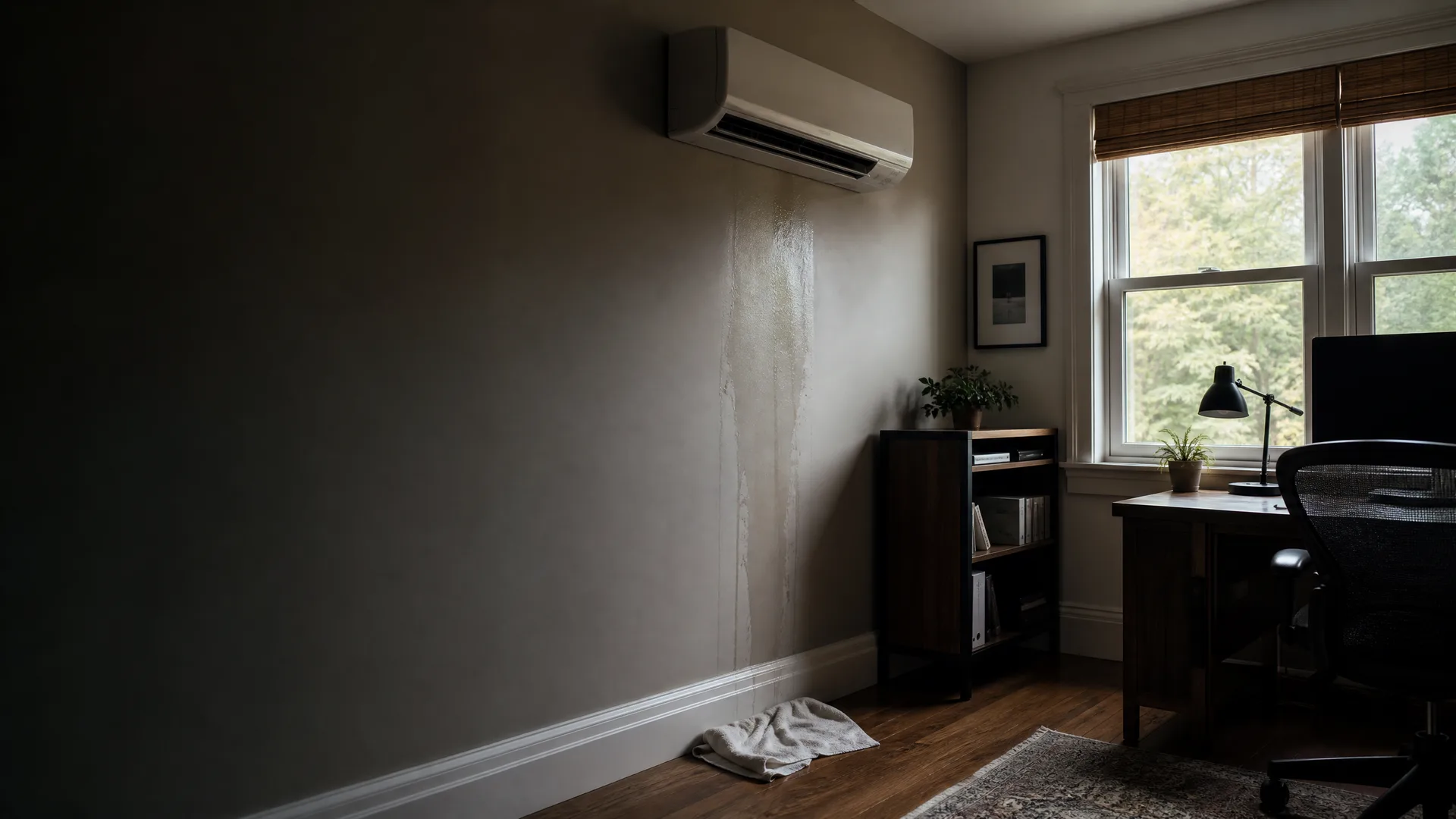
You're at the desk by two o'clock, working through the heat, when you notice the wall under the indoor unit looks dark. A streak of water runs down from the casing to the baseboard, slow and steady, and the carpet under it is already damp. You grab a towel from the hall bathroom and lay it against the wall to catch the drip. The unit is still running, air coming out of the vent but not cold, not really. Outside, the Story County afternoon sits heavy and still, the kind of July day that makes the office unusable without it. You stand there a minute, towel underfoot, watching the wall to see if the streak is still spreading.
Cooling runs June through August
Three months isn't much time to notice a mini split is struggling before August heat pushes it past its limit. A unit that's already short on cooling in June won't find extra capacity later in the summer. Whatever's holding it back now needs sorting before the hottest stretch hits.
A refrigerant leak, a dirty condenser coil, or a failing compressor are not jobs for guesswork. Someone has to connect gauges, check the charge, and see what the coil and fan are actually doing before anything gets fixed. That takes a license and the right equipment, not a towel and a shop vac. The longer a struggling mini split runs low on refrigerant or starved for airflow, the harder the compressor works to make up for it, and that's the expensive part to replace. Getting a local contractor who works on these systems all summer, someone who's seen what Ames heat and humidity do to a condenser packed with grass clippings or a unit that's just undercharged, means the diagnosis starts from experience instead of trial and error. One contractor looking at your unit, with your symptoms, beats guessing through a list of possible causes while the house stays warm and the carpet by the indoor unit stays damp.
Fixing it now, in June or July
A mini split that's struggling in early summer still has a shot at a quiet fix. A low charge gets topped off, a coil gets cleaned, a capacitor gets swapped, and the unit runs the rest of the season the way it should. Parts are easier to get this time of year, and a contractor who works on these systems all summer has likely already seen whatever's going on with yours. Catching it in June also means you're not without cooling during the worst stretch of the summer, when the house needs it most.
Waiting until August to deal with it
Put it off and the same problem is still there, except now it's running against three months of Story County heat instead of one. A compressor already working harder than it should doesn't get a break as the summer goes on, and a small refrigerant leak doesn't seal itself. By August, parts can be backordered and contractors are booked solid with the same kind of call. You end up living with warm air and high humidity longer, and the unit spends more of its short cooling season struggling instead of keeping up.
A mini split that won't cool has a reason, and it's findable
Warm air from the indoor unit, ice on the line, water where it shouldn't be. Each of those points somewhere specific: a low charge, a coil that can't shed heat, a compressor on its way out. None of it fixes itself, and none of it needs guessing once someone has gauges on the system and eyes on the coil.
Story County summers don't leave much room to wait this out. If your mini split is struggling now, the next step is getting matched with a licensed contractor local to Ames who works on these systems all season and has a good idea what's wrong before they even knock on the door. Just the one contractor reaching out, not a handful of companies competing for the job.
Get your mini split to the right pro
A licensed pro who works in Story County gets your request.