Why your mini split blows cold air in Iowa
A mini split blowing cold air when it should be heating almost always means it's stuck in cooling mode, or the reversing valve that switches it between heating and cooling is failing to shift over. Check the thermostat or handheld remote first. If it's set to heat and the air coming out is still cold, the problem is likely mechanical, not a setting. The reversing valve can stick from a worn solenoid or a refrigerant issue, and once it sticks, the system keeps running as if it's summer no matter what you tell it. A low refrigerant charge can cause the same symptom, since the unit can't move enough heat to warm the air passing over the indoor coil. With gas heat covering most homes here, a mini split acting up usually isn't your only source of warmth, but it still means the room it serves is running cold while the part that's wrong sits there getting worse.




Inside the Reversing Valve
- The reversing valve shifts refrigerant flow so the indoor coil switches from absorbing heat to releasing it.
- A solenoid on top of the valve gets the signal from the control board and physically slides the valve body.
- If that slide gets stuck, the valve stays in the cooling position no matter what the remote tells it.
- Low refrigerant charge can keep the valve from seating fully, so it leaks back toward cooling even after switching.
- A frozen or dirty outdoor coil in cold weather can trip the defrost cycle to run longer than it should, pushing cold air inside.
- The control board itself can fail and send the wrong voltage to the valve, even when the remote display shows heat mode.
The part doing the work here is the reversing valve, a small brass fitting on the outdoor unit with four refrigerant lines running into it. In cooling mode, it routes hot refrigerant gas outside and sends cold refrigerant inside. In heating mode, it reverses that path so the indoor coil becomes the hot side instead. The switch happens by sliding a valve body back and forth, and that slide is triggered by a solenoid coil mounted on top, which gets its signal from the control board when you change modes on the remote. On a healthy system, that slide happens in under a second and you feel warm air within a minute or two.
Problems show up in a few different spots along that chain. The valve body itself can stick halfway, often from years of the same position or from debris in the line, and when it sticks it tends to stick toward cooling since that's the mode most mini splits run more often here through a muggy Iowa summer. The solenoid can also fail on its own, meaning the board sends the signal but nothing physically moves. Separately, if the system is low on refrigerant, there isn't enough pressure behind the valve to seat it fully in either direction, so it drifts back toward cooling partway through a heating cycle. Cold snaps add another layer: the outdoor coil can ice up, and the unit switches briefly to cooling mode on purpose to defrost it. If that defrost cycle runs too long or too often, it can feel like the system is stuck rather than just catching up.


If your mini split is set to heat and cold air keeps coming out, the room it serves stays cold while the unit keeps running. That's not a quirk to wait out. A sun porch or addition that depends on the mini split has nothing else carrying the load, so it sits at whatever temperature the gas heat reaches on its own. The unit itself doesn't idle through this. A compressor calling for heat but stuck running the cooling cycle can short cycle, switching on and off without warming anything, and that shows up on the power bill even with Iowa's cheap electricity. Outside, the same mismatch can frost the outdoor unit, and once ice builds up there, the system can stop running altogether. None of this corrects itself overnight. A reversing valve or solenoid that fails once in a cold snap tends to fail the same way again the next time it's asked to switch. Getting it looked at after the first morning of cold air, instead of after a week of it, is usually the difference between a small fix and a bigger one.
What a stuck valve costs you
- A mini split stuck in cooling mode in January is pushing cold air into a room that already needs heat, not just failing to help.
- If your mini split is the main heat for a sun porch or addition, a stuck reversing valve leaves that room relying on whatever gas heat reaches it.
- A unit that short cycles while stuck in the wrong mode runs its compressor more often without warming the room, which shows up on a power bill even with cheap electricity.
- Ice can build on the outdoor unit when it's calling for heat but running the cooling cycle, and that ice can stop it from running at all.
- Left alone through a cold snap, a stuck valve or a bad solenoid tends to fail the same way again, not get better on its own.
- Catching this on the first cold morning, rather than after a week of cold air, usually means a smaller repair.
A mini split pro near you
A mini split stuck blowing cold air isn't something to wait out, especially once nights here drop toward freezing and gas furnaces are carrying most of the house. If a mini split handles a bonus room or addition the furnace doesn't reach, that room is on its own until the reversing valve gets fixed or replaced. Electricity is cheap in Iowa, but that doesn't help if the unit is pushing the wrong temperature of air no matter how long it runs. A stuck valve or a bad solenoid isn't something to diagnose by trial and error with the remote. A contractor who works on mini splits can confirm whether it's the valve, the solenoid, or the control board sending the wrong signal, and get it switching modes correctly again. Sending the request now means you're not the one tracking down who's available and who isn't. That part moves off your plate as soon as the form goes in.

Summer dew points in Iowa average 62°F across June, July and August, per NOAA climate data. That's heavy, sticky air, and your mini split has to pull a lot of moisture out of it before the room feels dry and cool. If the reversing valve is sticking or slow to shift, you'll notice it here too: the air coming out feels cool but the room stays clammy, or the unit runs longer than it should without the house actually feeling comfortable. A mini split working against that kind of humidity needs its mode switching clean, not fighting a valve that won't fully commit to cooling.
NASA POWER T2MDEW county cells weighted by homes
What are you noticing right now in that room?
You set the mini split to heat and cold air keeps coming out, or it warms up for a minute then slides back to cold. The room it serves stays cooler than the rest of the house no matter where you set the temperature. You might hear the unit clicking or the fan changing speed as it tries to switch over. If this room is an addition or a bonus space without its own duct run from the furnace, it has nowhere else to pull warmth from, so the drop is more noticeable there than anywhere else in the house. Left alone through a cold stretch, that room just stays cold.

Thermostat or remote sends a call for heat to the control board.
Control board sends voltage to the reversing valve solenoid.
Solenoid should slide the valve body to redirect refrigerant flow.
Indoor coil switches from absorbing heat to releasing it.
Power costs 13.62 cents per kilowatt-hour statewide
At 13.62 cents per kilowatt-hour, running a mini split stuck in the wrong mode costs you for nothing, since the unit keeps drawing power while it fights itself instead of heating the room. A quick repair stops that waste the moment the valve shifts right.
EIA-861 2025 statewide residential average
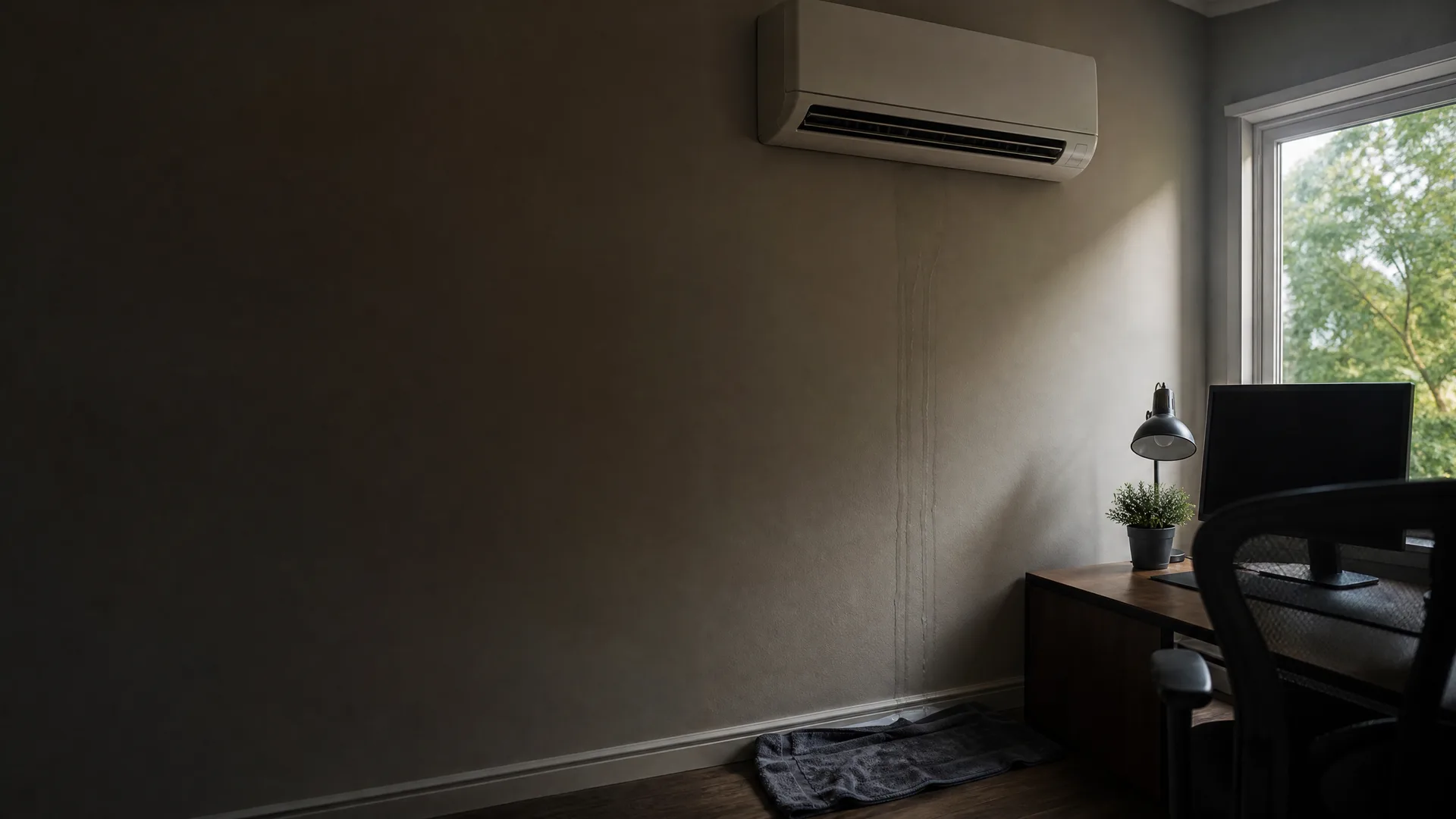
You're at your desk in the home office on a sticky July afternoon, mini split humming above the window. You glance up because something's dripping. A wet streak runs down the wall below the indoor unit, and it's already found its way to the floor. You grab a towel from the hall closet and press it against the baseboard, then stand back and look at the unit like it's going to explain itself. The air coming off it still feels cool, maybe cooler than it should, and that line of water keeps creeping lower while you watch.

A mini split blowing cold air in heating mode has a reason, and it's fixable
A reversing valve that won't shift is a mechanical problem, not a mystery. A contractor who works on mini splits can test the solenoid, check the signal from the control board, and tell you within the visit whether the valve needs cleaning, a new solenoid, or a full replacement. That's a known repair with a known fix, not a guessing game.
You don't have to track down who does that work. Once you send the request, getting matched with a contractor who handles your system stops being something you have to figure out. They'll reach out to you directly about the room that's stuck cold and what it'll take to get heat back into it before the next hard freeze.


A local pro for your mini split repair
Sending the form costs nothing.
A stuck reversing valve doesn't fix itself. Cold air in heating mode will keep showing up night after night while that room falls further behind the rest of the house. Getting the valve checked now means one fewer thing to manage once temperatures drop for good.