Why is my mini split leaking water in the winter?
Cold weather and a puddle under the indoor unit don't seem to go together, which is probably why it's confusing. You expect this in July when the unit is pulling humidity out of sticky Iowa air, not in January when the furnace is doing most of the work and the mini split is barely running. Something is wrong, but it helps to know whether it's a quick fix or a sign the unit needs a real look.
A frozen or clogged condensate line is draining where it shouldn't
Winter leaks almost always trace back to the condensate drain, the small line that carries moisture off the indoor coil. In cold weather that line can freeze solid if it runs through an unheated space, and once it's blocked, the water backs up and drips inside instead of outside. A cracked or disconnected line does the same thing, as does a drain pan that's cracked or full of algae buildup from warmer months. Low refrigerant can also cause the coil to ice over, and when that ice melts, it floods the pan faster than the line can clear it. Either way, the leak isn't coming from the cold air itself. It's coming from water that has nowhere to go.

Cold coil meets warm room air and condensation forms
Water should drip into the built-in condensate pan
Ice forms on the coil and blocks normal drainage
Melting ice overflows the pan onto your floor
Frozen Coil or Blocked Drain
Frozen Coil
- The outdoor unit's defrost cycle isn't keeping pace with a stretch of single-digit Iowa nights, so frost builds faster than it clears.
- A dirty indoor filter cuts airflow across the coil, and less airflow means the coil runs colder and ices up sooner.
- A low refrigerant charge drops coil temperature below what the system is designed for, so ice forms even on a mild January day.
- The condensate line inside the unit freezes shut, so meltwater backs up into the pan and spills over the sides.
- Running the heat on a very low fan speed for hours at a time gives frost more time to build than the defrost cycle can undo.
Blocked Drain
- The condensate drain line running outside has ice plugging the end of it, so water has nowhere to go but back into the unit.
- A sagging section of drain line holds standing water, and that water freezes solid on a cold Iowa night.
- Dust and algae built up in the drain pan or line over the summer, narrowing the path water needs to drain.
- The drain line's outdoor termination point sits low enough that snow or ice has piled over the opening.
- An indoor unit that was mounted slightly out of level lets water pool in the pan instead of draining toward the line.
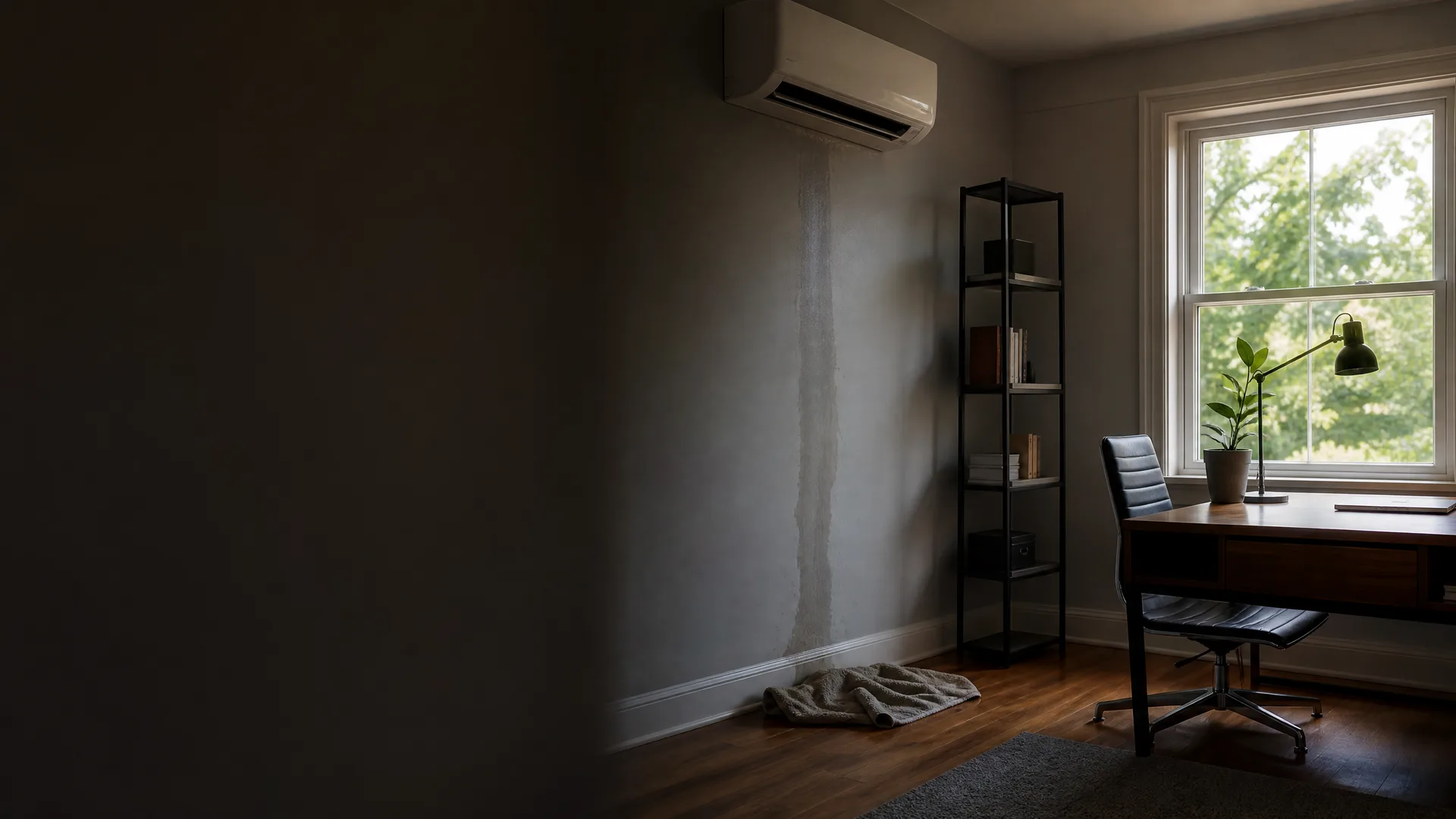
Your desk sits under the indoor unit, and that's how you noticed. A dark line on the wall, running down from the casing, and by the time you looked up from your laptop the towel was already soaked through. Outside it's one of those January afternoons where the sky stays gray and the wind doesn't let up, the kind of cold that's been sitting over Iowa for days. You wring out the towel, lay it back down, and watch the wall for a minute to see if it's still coming. It is. You've already decided you're not spending another evening mopping up after it.
Get your mini split to the right pro

Send the request today and stop worrying about who to call.
Asking costs nothing, and the choice to hire stays yours.
The Defrost Cycle Backfires
- The outdoor unit runs a defrost cycle every so often, reversing briefly to melt frost off its own coil.
- That reversal sends a short burst of cold refrigerant through the indoor coil, which is normally the warm side in heat mode.
- If the drain line or the condensate pan has any ice in it already, that cold burst is enough to freeze meltwater where it sits.
- A tilted indoor unit or a sagging drain line lets water pool instead of running out, and pooled water freezes first.
- Warm room air hits that frozen pan and drain path and the melt has nowhere to go but over the edge.
- Insulation worn away from the line set outside lets outdoor cold travel up the copper and chill the indoor coil beyond what the room air alone would do.
The outdoor unit isn't just sitting there blowing cold air into the cold. Every so often it runs a defrost cycle, reversing the refrigerant flow for a few minutes to melt the frost that builds on its own coil during those long Iowa cold snaps. That's normal and every heat pump mini split does it. The problem is what that reversal does on the indoor side. For those few minutes, the coil that's supposed to be warm turns cold, and if there's already any ice sitting in the drain line or the condensate pan from an earlier cycle, this fresh burst of cold is enough to freeze whatever meltwater is sitting there before it can drain. Add a unit that's slightly tilted, or a drain line with a low spot in it, and water that should be running out to the exterior wall pools instead, right where it's most likely to freeze solid. Once that happens, the next batch of condensation has nowhere to go. It sits on top of the ice, warm room air keeps hitting that blocked pan, and eventually it overflows the edge rather than draining out like it's supposed to. If the line set outside has lost some of its insulation, bare copper lets outdoor cold travel straight up into the indoor coil, which makes it colder than the room air alone would ever make it, and that makes the freezing worse every cycle after.
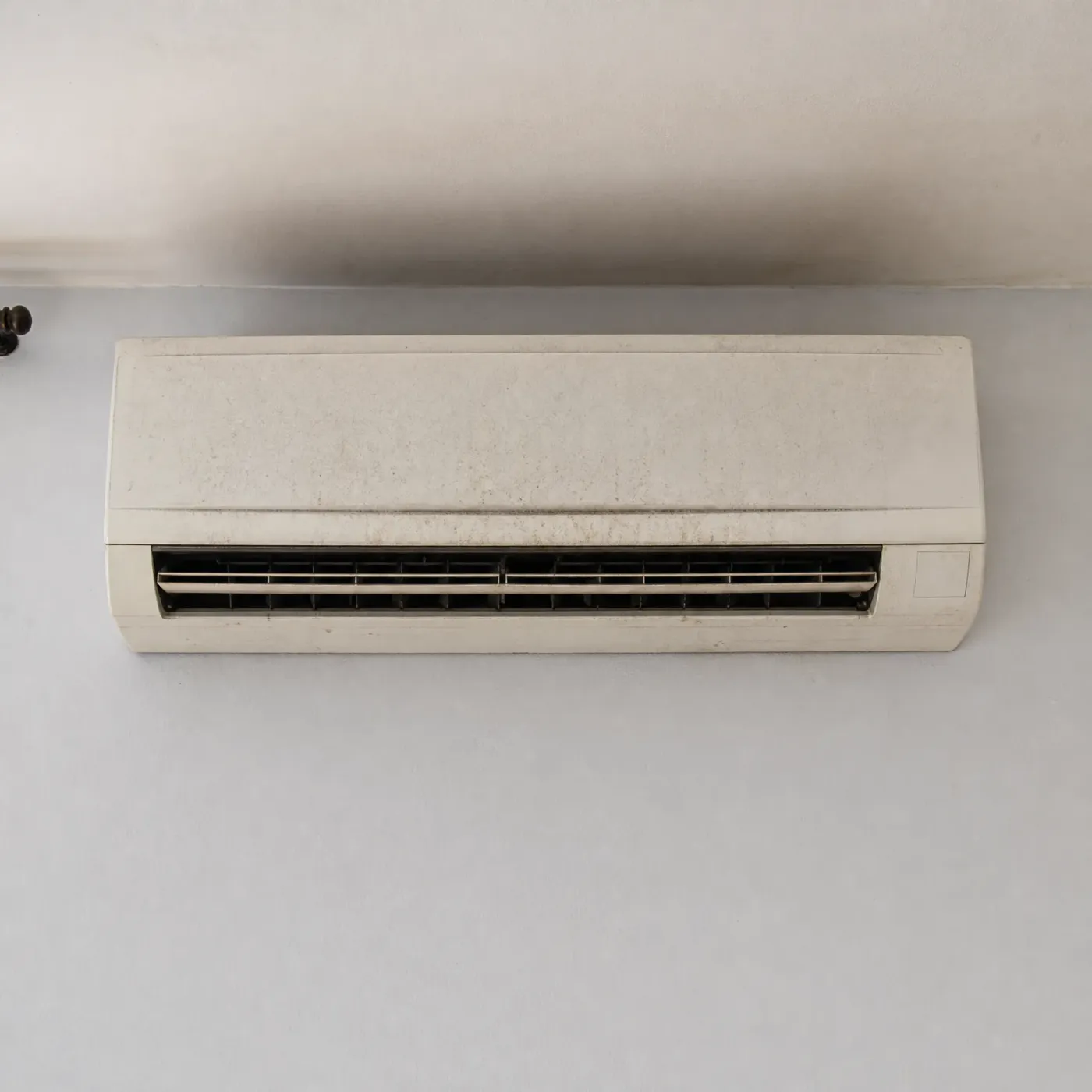
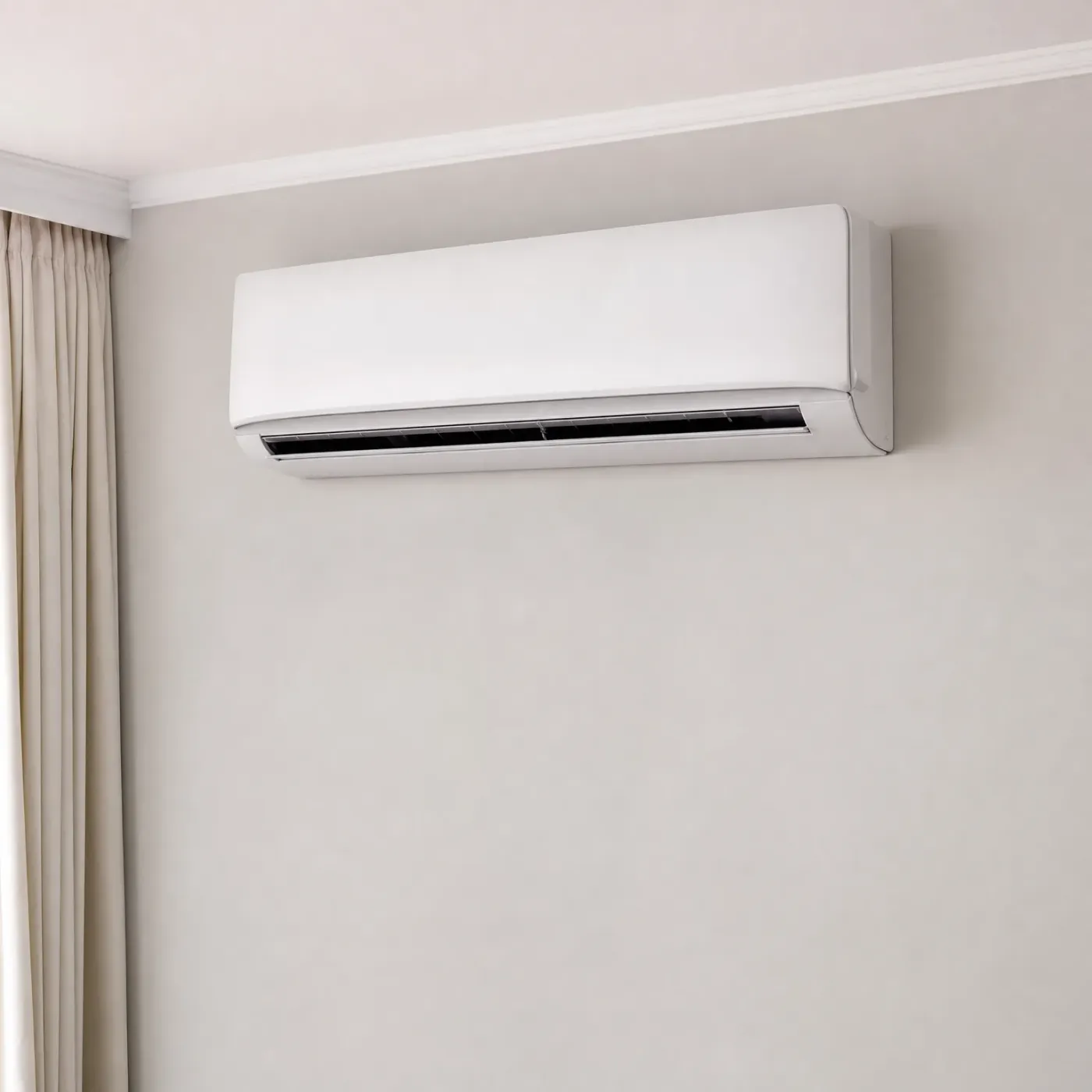
The indoor coil isn't level. It sits on a slight tilt so water runs toward the drain pan instead of pooling against the casing. From there it either drains downhill through the line set or, on units built with a pump, waits in the pan until the float switch trips and pushes it out. Either path depends on a clear line. A kink in the tubing or a clog where it exits the wall will send water back into the unit instead of outside.
Airflow matters just as much as drainage. Months of dust on the coil fins slow the water running off certain spots, and those spots ice over first once the coil runs cold. The ice then blocks the normal path to the pan, so when it melts, it overflows somewhere the pan was never built to catch.
Not every leak traces back to the drain at all. If the line set's insulation has gaps, the refrigerant lines sweat inside the wall, and that shows up as moisture with nothing to do with the pan or the pump.
How the drain actually works
- The indoor coil sits at a slight tilt inside the housing so gravity pulls water toward the drain pan instead of the casing edge.
- A condensate pump, if your unit has one, only kicks on after enough water collects in the pan to trip its float switch.
- The drain line runs downhill or through a pump to clear water outside, and either a kink or a clog backs water up into the unit.
- Dust and lint settle on the coil fins over months of use and slow the water running off them, which lets ice form in those low spots first.
- Insulation wrapped around the line set keeps the refrigerant lines from sweating inside the wall, and gaps in that wrapping create a second source of moisture that has nothing to do with the drain.
- A mini split installed without the correct pitch on the drain line will backflow under certain airflow conditions even when nothing is blocked.




Power costs 13.62 cents per kilowatt-hour statewide
Power here runs 13.62 cents a kilowatt-hour, so a mini split is a cheap habit to lean on, not a costly one to fix. That makes it worth repairing rather than working around. Leave it icing up and leaking through January and you're not saving anything, just risking the floor under it.
EIA-861 2025 statewide residential average


A mini split leaking in January comes down to ice on the coil blocking the drain, usually because airflow or the defrost cycle couldn't keep up with an Iowa cold snap. That's a mechanical problem, not something that fixes itself by running the unit less or mopping up more towels. Once you send the form, you're done hunting for who can look at it. The search for a contractor stops being on your plate, and someone who handles mini splits gets your details and reaches out. You don't have to track down a name, read through reviews, or call around during the one hour you had free this evening. That part is off your list. What's left is simple: a tilted coil, a clear drain line, and airflow that keeps the ice from forming in the first place. Get that sorted and the puddle under the indoor unit stops being a January fixture.
The right pro for this job
One request and the search for a pro is handled.