Cold snaps are when a mini split talks the most. A clicking sound as it starts a defrost cycle, a whoosh of air that sounds louder than usual, a hum from the outdoor unit buried in snow. Some of that is normal. Some of it means something inside is working harder than it should, or failing.
If your mini split is making noise this winter, you probably use it to carry a room or two while a gas furnace handles the rest of the house. That split duty matters. A noise that would be easy to ignore on a backup system becomes a real problem when it is the only thing keeping a room warm during an Iowa cold stretch.
Figuring out which noise is which takes someone who works on these systems through an Iowa winter, not just an Iowa summer. Mini splits get plenty of attention here in the sticky months. Fewer people know how they behave once it drops below freezing and the outdoor unit starts cycling through defrost. That knowledge is specific, and it is not something every HVAC contractor has on hand.
That is the part this page shortcuts. Instead of searching around for someone who services mini splits, calling a few places, describing the sound over the phone two or three times, and waiting on quotes to compare, you get matched with one licensed contractor local to Iowa who already does this work. Someone who has heard that clicking and that hum before, on systems like yours, in weather like this.
You are not left sorting through a list of unfamiliar companies or fielding calls from several contractors at once trying to win the job. It is one contractor, local, licensed, and familiar with how mini splits act once winter sets in.
Below, you will find what the common noises usually mean and what tends to cause them. When you are ready to get the noise looked at, the request goes to that one contractor.
That clicking and the whoosh of air are usually the defrost cycle. Iowa winters put a layer of frost on the outdoor unit's coil, and the mini split has to stop heating every so often, reverse itself, and melt that frost off before it keeps going. You'll hear a click as it switches over, then a whoosh that sounds like a burst of cold air blowing through the house for a minute or two. That part is normal, and it happens more on the coldest nights because the coil ices up faster. What's not normal is a hum or rattle that doesn't stop, a buzzing from the outdoor unit, or banging when it kicks on. That usually means a fan motor, a loose part, or ice that built up faster than the unit could clear it. If the noise outlasts the defrost cycle or shows up every time the system runs, something inside needs a look before the cold makes it worse.
The outdoor unit isn't struggling when it clicks and hums through a cold snap. That click is the reversing valve switching the refrigerant flow, and the fan stopping, so warm refrigerant can run through the coil instead of cold. The compressor doesn't shut off for this. It keeps running the whole time, which is why you still hear that steady hum even while the fan outside sits still. Once the frost melts off the coil, the valve switches back and the system picks up heating again. The cold whoosh you notice from the indoor head right after is the air moving again before it's had time to warm back up, so it feels off for a few seconds and then evens out. Where it stops being normal: if the outdoor unit is packed in snow or ice, the coil can't get the airflow it needs, and defrost ends up running longer and more often than it should. And a clean click is one thing. A grinding or rattling noise is a different problem, usually a fan blade or a motor bearing, not the defrost cycle at all.
What's Happening Inside During Defrost
During defrost the outdoor fan stops and a reversing valve switches the refrigerant flow, which is what causes the clicking you hear at startup.
The compressor keeps running through defrost, so the hum you hear from the outdoor unit doesn't mean anything is stuck.
Warm refrigerant routes through the outdoor coil to melt the frost, then the system switches back and resumes heating the house.
A whoosh of cold air from the indoor head right after defrost is normal because the unit briefly blows air before it's reheated.
If the outdoor unit is buried in snow or ice, airflow to the coil gets blocked and defrost cycles run longer and more often.
A grinding or rattling sound, instead of a clean click, usually points to a fan blade or motor bearing rather than the defrost cycle.
Skip the calls to every shop
The pro who reaches out is licensed in Iowa.
Fill out one short form instead of calling around.
A grinding or scraping sound is different from a click. So is a rattle that keeps time with the fan, or a hiss that wasn't there last winter. If the outdoor unit is buried after a snowfall and the noise changes once it's cleared, that's worth noting. A mini split that short cycles, that is, kicks on and off every few minutes instead of running steady, is working harder than it should in a hard freeze. Left alone, a refrigerant leak or a failing fan motor won't fix itself, and running a unit in that state through an Iowa winter can wear out the compressor faster than it should. If the sound is new, louder, or paired with weaker heat than you're used to, that's the point to get it looked at.
Running the way it should
This is a mini split that's moving air the way it's supposed to. No grinding, no scraping, no new sound that wasn't there last winter. A click at startup and some airflow noise through a cold Iowa night is normal and nothing to chase down.
Something's built up inside
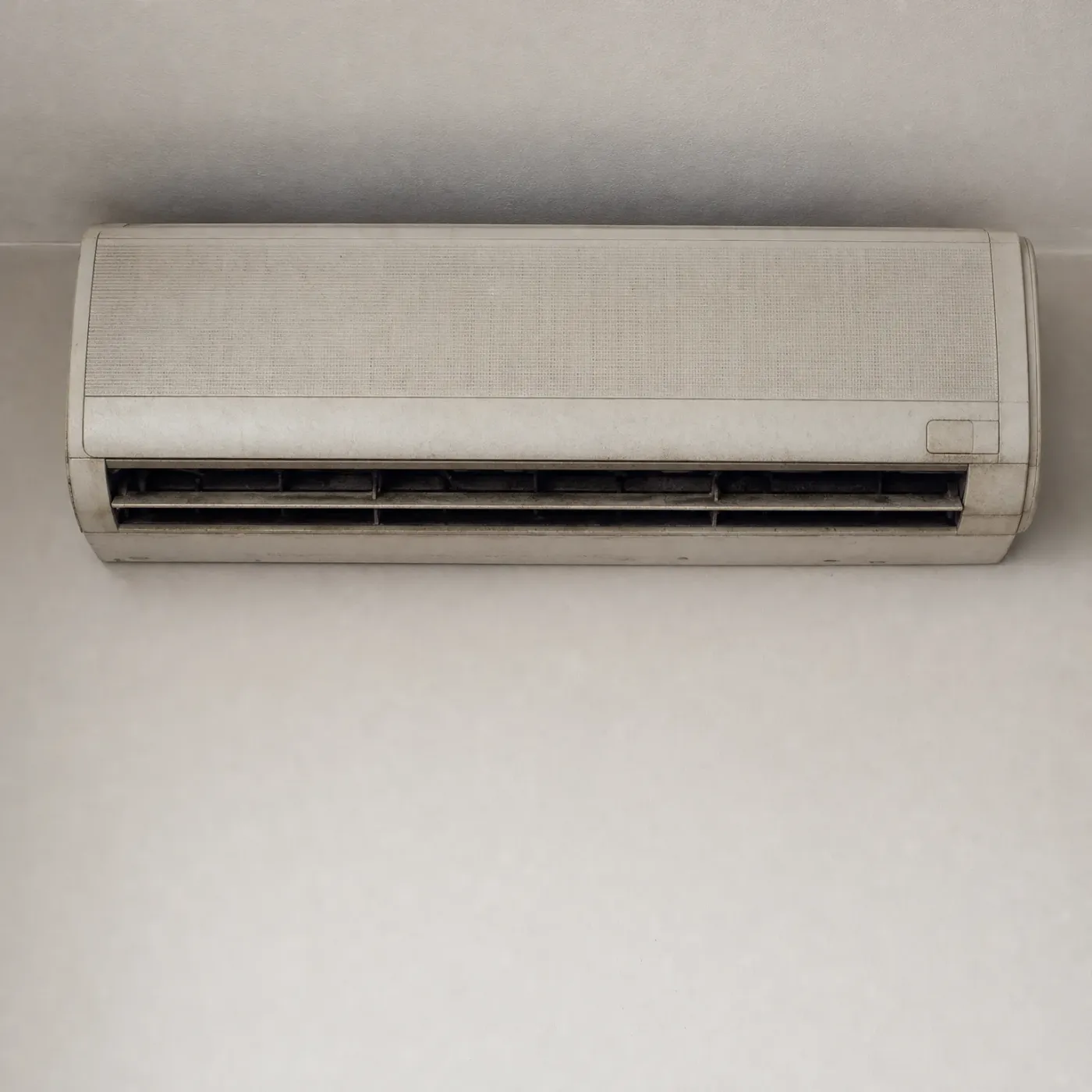
Dust and grime along the vents like this usually come with noise that doesn't match the defrost pattern, a rattle, a hiss, a sound that's gotten louder over the season. A contractor who services these units every winter can open it up and tell you what's causing it.
Power costs 13.62 cents per kilowatt-hour statewide
At 13.62 cents a kilowatt-hour, running a mini split through an Iowa winter costs less here than in most states. That's worth knowing before you assume a noisy unit is driving up your bill. If something inside is actually failing, the fix is worth doing right, not avoiding because you think the power is the problem.
EIA-861 2025 statewide residential average
What the sound is telling you
A click at startup and steady airflow noise on a cold night is the defrost cycle working the way it should.
Grinding, scraping, or a new rattle that wasn't there last winter means something inside has worn out or come loose.
A mini split that's buried in snow can sound different without being damaged, but a change in pitch under the snow is worth a second look.
Letting a failing part run through an Iowa winter usually turns a small repair into a bigger one by spring.
A contractor who services mini splits all winter in Iowa has heard these same sounds before and knows which ones mean a part is going.
Sorting out one licensed local contractor beats calling around and repeating the same description of a noise to several companies.
Most of what you hear from a mini split in an Iowa winter is the defrost cycle doing its job. The click at startup, the whoosh that seems louder on the coldest nights, the hum from a unit half buried in snow. None of that means trouble. What means trouble is a sound that's new: grinding, scraping, a rattle that wasn't there last winter, a pitch that changes once the snow is cleared away. Those point to something worn or loose inside, and running the unit through the rest of the season with that part failing tends to turn a small repair into a bigger one once spring comes.
If what you're hearing sounds like the second kind, the part that matters most is who looks at it. A mini split is not the same machine as a furnace, and not every contractor who touches heating equipment in Iowa spends their winter on these units specifically. The ones who service mini splits all season have heard the sounds you're describing dozens of times before, on units sitting in the same cold, buried in the same snow, and they know which ones mean a reversing valve is sticking or a fan motor is on its way out versus which ones are nothing.
Finding that person yourself means calling around, describing the same noise over and over, and comparing quotes from companies you don't know. Matching with one licensed contractor local to you skips that, and because it's one contractor instead of several, you're not fielding calls from a handful of companies all at once.
Mini Split Repair
Skip calling around
Step 1 of 3: Equipment
Tell a local repair pro what your mini split is doing.
A local pro who knows mini splits gets your details and gets in touch.
Once you send the form, finding a pro is off your list.
After you send the request, you're done searching.
Skip searching for a mini split pro and answer a few questions instead.
One form replaces the calls you'd make to find a mini split pro.
Your request stays with one local pro.
Your request goes to one pro, not a list of companies.