Why your mini split won't turn on in an Iowa winter

Skip searching for a mini split pro and answer a few questions instead.

Start one form

A mini split that won't turn on in winter is usually frozen up or locked out from ice that formed on the outdoor unit. In an Iowa winter, that outdoor unit sits through nights well below freezing, and every time it runs, moisture in the air collects on the coil. The system is built to melt that off on its own with a defrost cycle, but if the coil ices over faster than it can clear, or a sensor that tracks the ice reads wrong, the unit shuts itself down rather than keep running iced up. Sometimes it's simpler: a breaker tripped, or the outdoor unit is buried enough in snow that airflow can't get through it. Either way, it won't just start working again if you wait it out. Something stopped it on purpose, and it needs to be found before the unit will run.

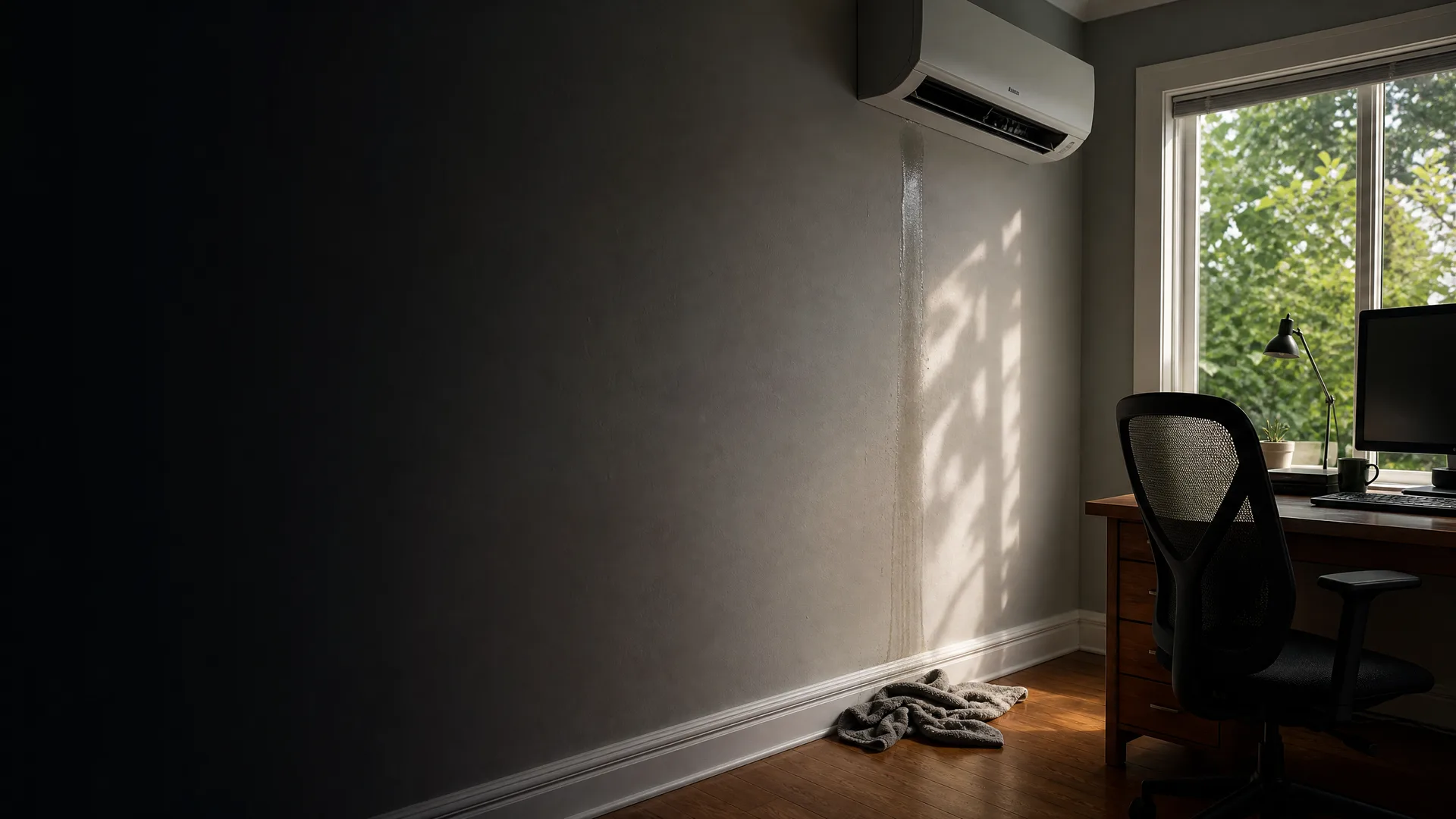
A wall-mounted mini-split air conditioner in a dim room, with a water streak running down the wall below it to a towel on the floor near the baseboard, beside a desk, office chair and monitor by a window.

You're at your desk on a July afternoon, the one with the window unit turned off because the mini split handles it. You notice the carpet under the window feels damp against your bare feet. Then you see it: a wet streak down the wall below the indoor unit, dark against the paint, and a towel already down on the floor where it's dripped before. The mini split is still blowing cold air. It sounds fine. But the water keeps coming, a little at a time, and you're wondering if it's been running like this for days while you were out of the room.


Clear The Ice, Or Find Out Why

Call a repair tech

  • A tech can tell you whether the outdoor unit is actually frozen or whether the control board has locked it out for a different reason entirely.
  • Someone who works on these units through Iowa winters knows which models ice up at the coil and which ones fail at the defrost sensor first.
  • A proper diagnosis catches a failing defrost board or a stuck reversing valve before it strands you on a night in the single digits.
  • One licensed contractor means one visit, one explanation of what's wrong, instead of describing the same problem to company after company.
  • If the fix is a part, a tech carries or can order the right one for your specific unit instead of guessing at a universal fix.
  • Getting it looked at now means you're not without heat the next time the temperature drops and the unit locks out again.

Wait it out yourself

  • Clearing visible ice off the outdoor unit might get it running again for a night, but it won't tell you why the ice formed in the first place.
  • If the defrost cycle itself is failing, the unit will freeze up again the next cold night no matter how many times you knock the ice loose.
  • A lockout code on the indoor unit's display usually points to something electrical or mechanical that clearing frost won't fix.
  • Running the unit while it's still partly iced can put strain on the compressor, turning a sensor problem into a compressor problem.
  • Without knowing which part failed, you're left guessing whether to keep resetting it or switch over to backup heat for the rest of the winter.
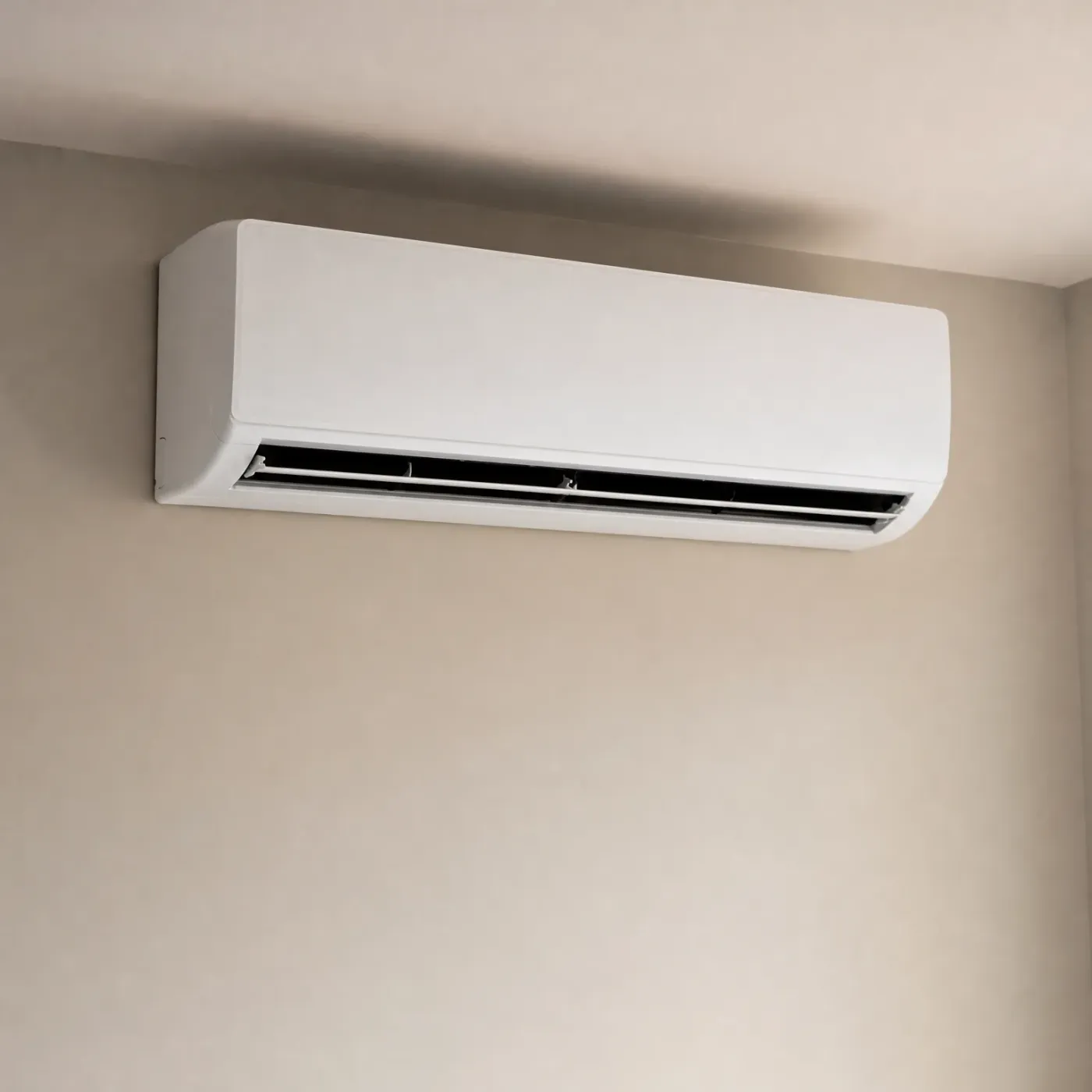
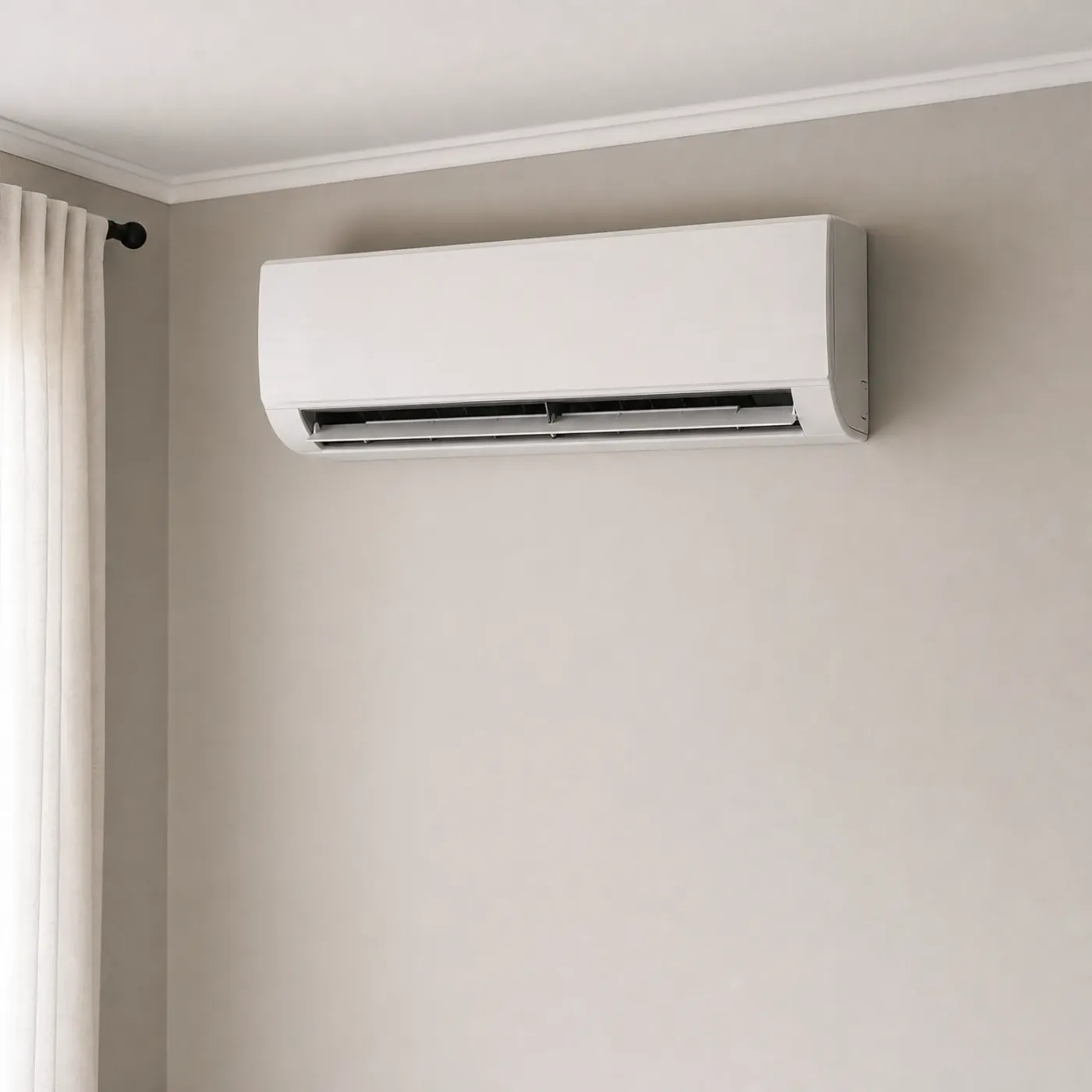
A white wall-mounted mini-split air conditioner installed near the ceiling on a plain beige interior wall.

Running right

This is what a mini split looks like when it's keeping up with an Iowa winter night. The outdoor coil stays clear, the unit cycles on and off as the room calls for heat, and the panel shows nothing unusual. No ice, no shutdown, no fuss.

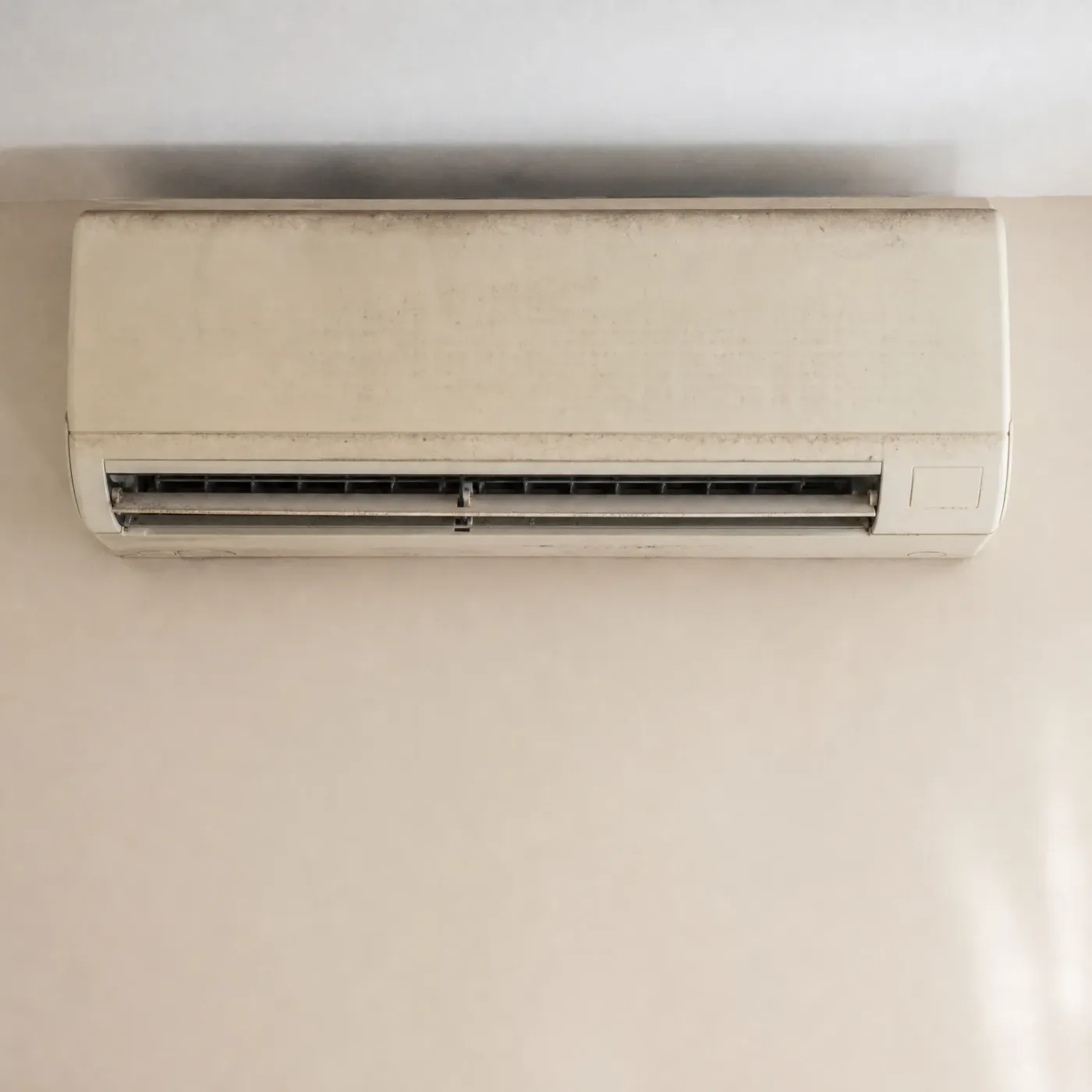
A dusty, discolored wall-mounted mini-split air conditioner unit near the ceiling of a plain beige interior wall.

Iced up and shut down

A casing this discolored has been through a lot of winters. Dust and grime like this often sit alongside a unit that's started freezing up on the coldest nights, locking itself out before it can warm the room. A tech who knows these units can tell you if that's what's happening to yours.

What's actually happening by the unit right now

Go look at the outdoor unit. If it won't start, you'll likely find ice built up on the coil or even across the whole cabinet, sometimes thick enough to cover the fan blades. Inside, the indoor head might blink an error code or just sit dark and unresponsive when you hit the remote. You may hear a faint clicking as it tries to cycle and gives up. If this has been going on for a few days, check the wall and floor below the indoor unit for dampness, that's condensate with nowhere to drain. Left alone through a stretch of single-digit nights, a unit that keeps locking out isn't heating that room at all, which matters if it's the only heat source there.

A man with grey hair and stubble in a dark sweater sits on a grey sofa indoors, looking off to the side, with a potted plant and a sunlit window behind him.
A man with gray hair, a beard and glasses, wearing a dark green sweater, sits on a gray sofa in a sunlit living room with a potted plant, table lamp and wooden sideboard behind him.
A middle-aged man with graying hair and a short beard sits on a blue sofa in a living room, looking toward a window, with a bookshelf, lamp and framed picture in the background.
A man with graying curly hair and a dark green sweater sits on a gray sofa in a sunlit living room, looking off to the side, with a framed picture, shelving, an armchair and a window with sheer curtains behind him.

Skip calling around

A frozen coil or a locked-out control board isn't something you talk a unit out of. It needs someone to open the cabinet, check the sensors, and find out why the defrost cycle isn't clearing the ice on its own. That's not a guess you want to make twice, which means calling around, explaining the same symptoms to two or three companies, and waiting to see who calls back first. This page skips that. One request goes to a licensed contractor near you in Iowa, someone who's already seen what an Iowa winter does to these outdoor units and which parts tend to fail first when the coil keeps icing over. You're not fielding calls from five different companies trying to win the job. You get one answer from someone who already knows what they're looking at. With your mini split down and the cold outdoor unit sitting there iced over, that's the part worth not doing yourself.

A mini split's defrost cycle runs on a timer or a sensor reading, not on how cold it feels outside. If that sensor is off or the reversing valve sticks, the unit can sit there building ice through an entire Iowa night without ever trying to clear it.

That's why a unit can ice over on one of the coldest nights of the year and never trip the defrost cycle at all. Once it's locked out, it needs a tech to find out why the sensor or valve stopped doing its job.

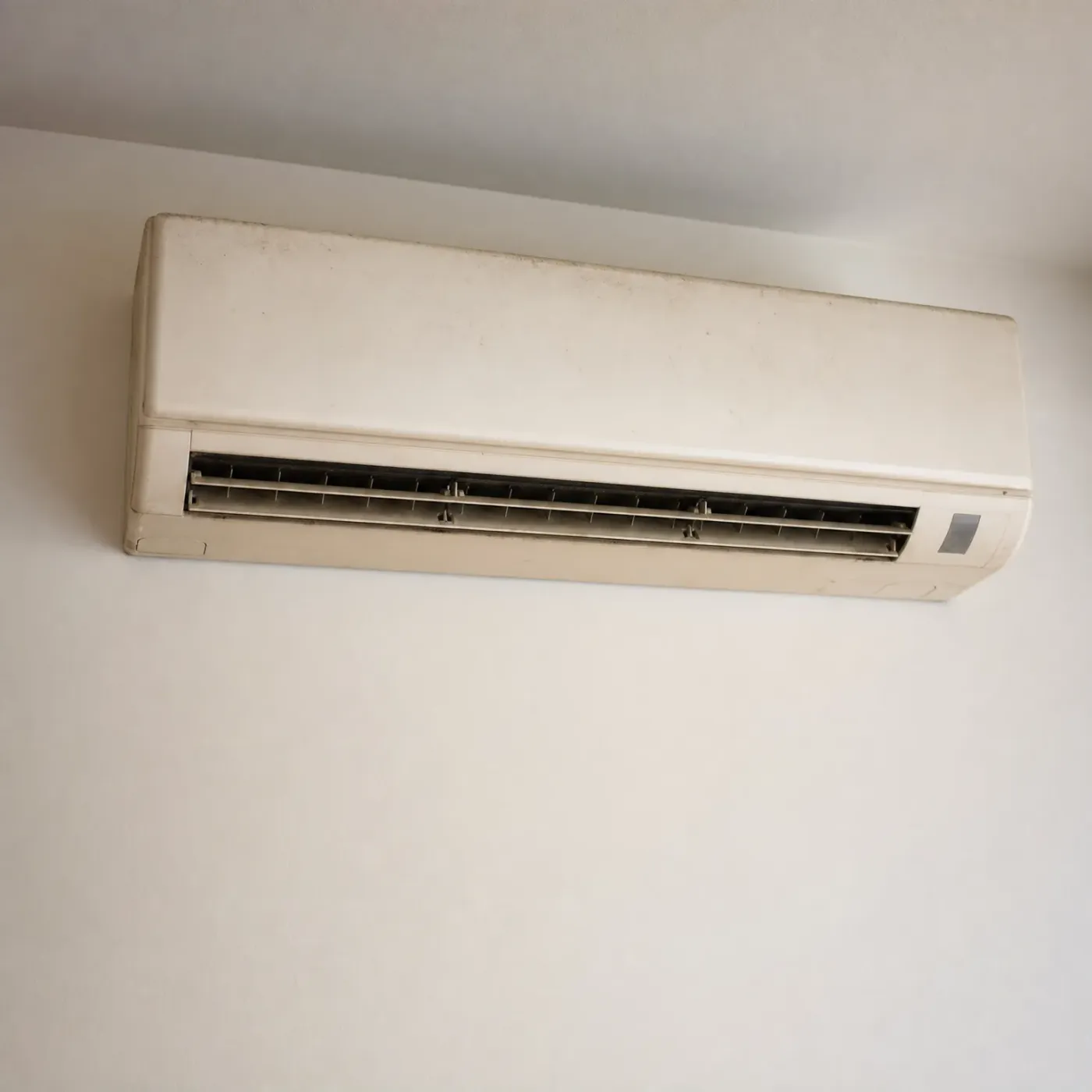
A wall-mounted mini-split air conditioner indoor unit with a discolored cream plastic casing and dusty outlet vanes, installed high on a plain light-colored interior wall near the ceiling.
Before you get your mini split repair
A white wall-mounted mini-split air conditioner installed high on a beige interior wall near the ceiling molding, with a light curtain and curtain rod at the left edge.
After you get your mini split repair

Keep calling around

You explain the frozen coil to one company, then the next, then wait on hold to compare what each one quotes you for a problem you still can't name for certain.

Skip calling around

One call, one local tech

Someone who works on mini splits through Iowa winters comes out knowing which parts usually fail in this cold, and you only tell the story once.

Skip calling around

Power costs 13.62 cents per kilowatt-hour statewide

At 13.62 cents a kilowatt-hour, running the backup heat strips or a space heater while your mini split sits frozen up costs more than it should. Once the ice is cleared and the unit's heating normally again, Iowa's cheap power keeps the bill reasonable.

EIA-861 2025 statewide residential average

  1. Moisture on the cold outdoor coil turns to frost

  2. The defrost sensor should trigger a short heat cycle

  3. A bad sensor or stuck reversing valve skips that cycle

  4. Frost builds until the control board locks the unit out

A closed silver laptop and a ceramic mug of dark coffee sit on a wooden table in front of two chair backs, with a kitchen counter, tiled backsplash, wooden cutting boards, a vase of greenery and a potted plant by a window behind.

A frozen coil doesn't clear itself

A mini split that won't start in an Iowa winter almost always comes down to ice on the outdoor coil and a control board that's locked out because of it. You can see the ice, but you can't see why the defrost cycle failed to clear it, and that's the part that needs a qualified set of hands on the cabinet.

Instead of explaining a frozen unit to one company after another and sitting on hold to compare quotes for a problem you can't fully describe yet, this page puts you in touch with one local tech who works on these systems through Iowa winters and already knows where the sensor or the reversing valve tends to fail. One call, and someone who knows the equipment takes it from there.

Interior corner of a room with a window and sheer curtain at left, a gray upholstered sofa with a cushion at right, and a round wooden table holding stacked books and a round vase with an olive branch.
At dusk, a dark board-and-batten house with a standing-seam metal roof and lit entry walkway of stone pavers, with two large outdoor heat pump units on a stone-walled pad at right and trees and hills in the background.

Mini Split Repair

No phone calls to make

Step 1 of 3: Equipment
  • A beige upholstered armchair with an olive cushion sits in a sunlit corner beside a wooden side table holding a ceramic vase with leafy branches, under a framed abstract artwork, on a woven rug over a wood floor.
    • A local pro who knows mini splits gets your details and gets in touch.
    • Tell a local repair pro what your mini split is doing.
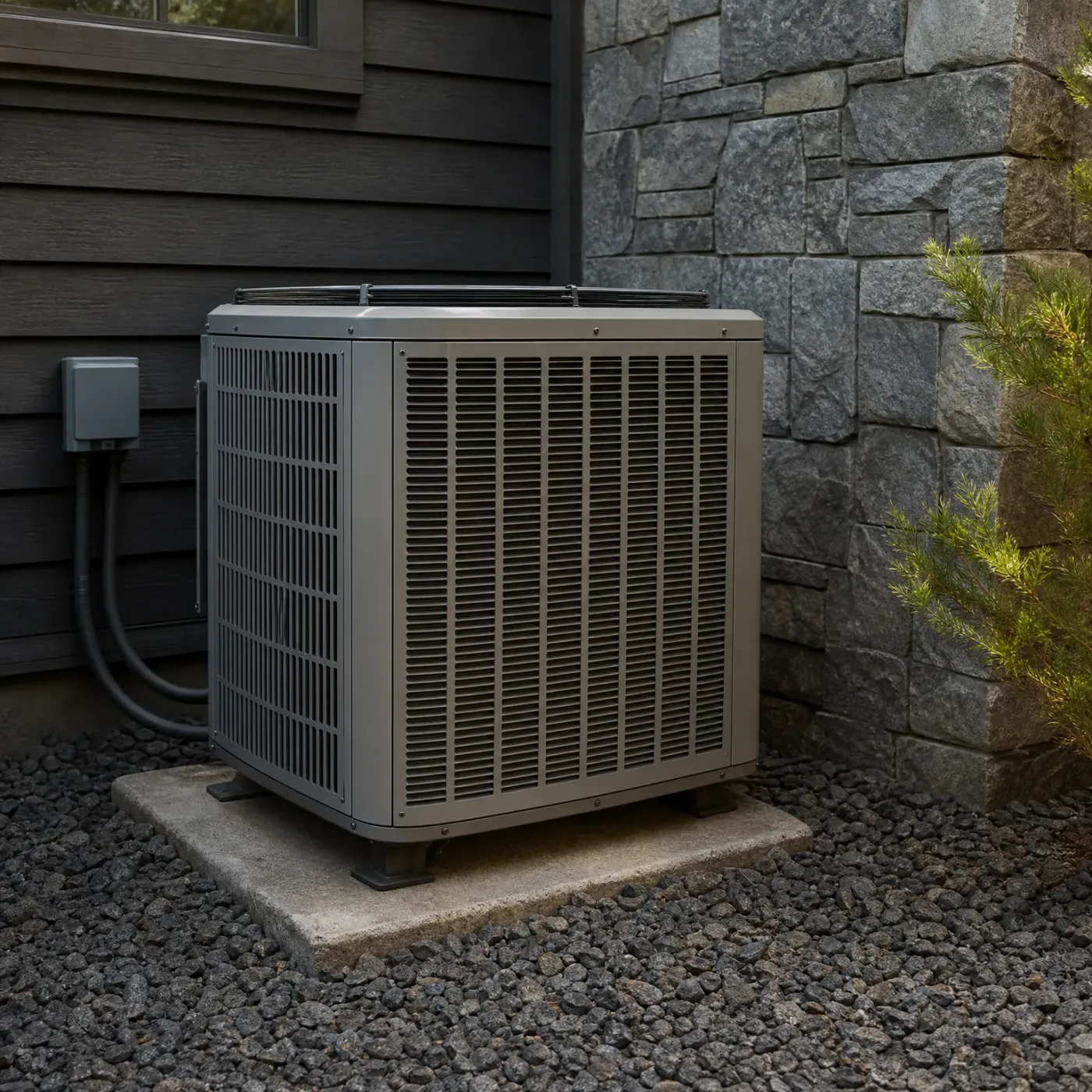
  • A gray outdoor condenser unit on a concrete pad surrounded by dark gravel, beside a dark wood-sided wall with an electrical disconnect box and a stone veneer wall with a small evergreen shrub.
    • Send it once and finding someone is no longer on you.
    • Send the request today and let a mini split pro reach out to you.
  • A beige upholstered oversized armchair with a matching cushion and a knit throw draped over one arm, beside a round wooden side table holding a vase of greenery near a curtained window, with a framed landscape print on the wall and a woven rug on a wood floor.
    • Describe your mini split job once, to one pro.
    • Fill out one short form instead of calling around.
  • Sunlit living room corner with a beige upholstered sofa, cushion and knitted throw, a round wooden side table holding a white ceramic vase of leafy branches and a small wooden bowl, a framed landscape painting on the wall, and a window at right.
    • Only one pro gets your request, so you hear from one company.